AI-driven rebalancing outperforms manual trading by eliminating emotional bias and executing trades with millisecond precision to minimize slippage. While manual trading relies on human intuition and periodic reviews, AI algorithmic trading vs manual trading shows a clear divergence in efficiency, specifically through continuous monitoring and automated execution of complex mathematical models.
AI-Driven Portfolio Rebalancing: Strategy vs Manual Trading
Discover why AI-driven rebalancing outperforms manual trading. We compare AI algorithmic vs manual trading to optimize returns and minimize slippage for crypto investors.
Crypto Finance Editorial DeskPublished Aug 17, 2026Updated Aug 17, 20265 min read1,107 words2 views
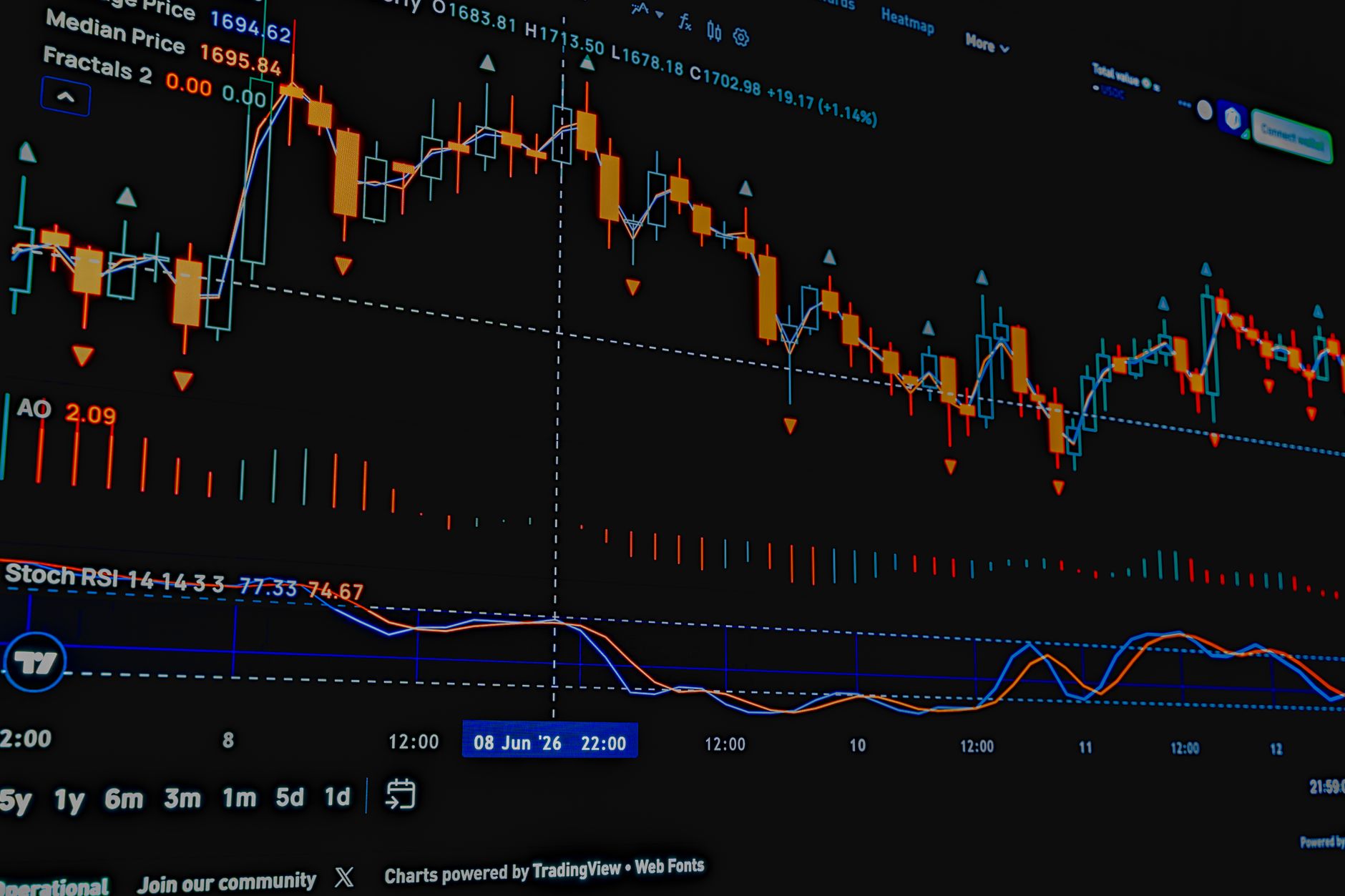
In the volatile landscape of digital assets, maintaining a target asset allocation is the cornerstone of disciplined portfolio strategy. As market correlations shift rapidly, the window to rebalance before significant drift occurs is shrinking. For retail investors, the choice between manual intervention and AI agents and RWA is no longer just about convenience; it is about the mathematical optimization of risk-adjusted returns.
Key takeaways
- AI rebalancing eliminates emotional bias and decision fatigue.
- Continuous monitoring reduces the 'volatility tax' compared to periodic manual checks.
- Smart execution algorithms (TWAP/VWAP) minimize slippage in crypto markets.
- Tax-aware rebalancing is essential to prevent transaction costs from eroding gains.
The Mechanics of Drift: Why Rebalancing Matters
Portfolio drift occurs when the market performance of specific assets causes the actual weightings of a portfolio to deviate from the intended strategic asset allocation. For instance, if Bitcoin surges by 50% while stablecoins remain flat, a portfolio intended to be 50/50 will rapidly become skewed toward Bitcoin. This unintended concentration increases the portfolio's beta, exposing the investor to higher volatility than their risk profile permits.
Manual rebalancing typically happens on a calendar basis—monthly or quarterly. However, this approach ignores the 'volatility tax' incurred when assets move significantly between these intervals. By the time a manual trader notices a drift, the opportunity cost of not harvesting gains or buying the dip may already be substantial. This is where the gap between human perception and algorithmic execution becomes a measurable financial variable.
AI Algorithmic vs Manual Trading: A Comparative Analysis
The fundamental difference lies in the transition from reactive to proactive management. Manual trading is inherently reactive; it requires a human to monitor price action, calculate the required trade size to return to target weights, and execute the order. This process is prone to 'decision fatigue' and emotional hesitation, especially during rapid market downturns when the instinct to hold onto losing positions (loss aversion) overrides mathematical necessity.
Conversely, AI-powered wealth management software utilizes continuous data streams to monitor drift in real-time. These algorithms do not just look at price; they integrate volume, liquidity, and volatility metrics to determine the optimal moment to execute. This minimizes slippage—the difference between the expected price of a trade and the price at which the trade is actually executed—which is vital for high-volume rebalancing in thinner crypto markets.
| Feature | Manual Rebalancing | AI Algorithmic Rebalancing |
|---|---|---|
| Frequency | Periodic (Weekly/Monthly) | Continuous/Trigger-based |
| Decision Basis | Intuition & Periodic Checks | Mathematical Models & Real-time Data |
| Execution Speed | Minutes to Hours (Human) | Milliseconds (Algorithmic) |
| Emotional Bias | High (Fear/Greed) | None (Rule-based) |
| Slippage Control | Low (Manual entry) | High (Smart Order Routing) |
Optimizing Slippage and Execution Efficiency
For the sophisticated retail investor, slippage is a silent killer of returns. In crypto markets, where liquidity can vanish during flash crashes, executing a large rebalancing trade manually can lead to significant price impact. An AI-driven approach utilizes sophisticated execution algorithms, such as Time-Weighted Average Price (TWAP) or Volume-Weighted Average Price (VWAP), to break large orders into smaller, more digestible pieces.
This level of execution is why professional traders often seek best crypto exchange platforms for high-volume traders. These platforms provide the API infrastructure necessary for AI to interact directly with order books. By spreading trades over time and monitoring liquidity depth, AI minimizes the market impact of the rebalancing itself, ensuring that the cost of staying within target allocation doesn't outweigh the benefits of the rebalance.
"The most dangerous myth in portfolio management is that rebalancing is a cost-center. In reality, systematic rebalancing is a volatility-harvesting mechanism that forces the investor to sell high and buy low automatically."
The Risk of Over-Optimization and Model Error
While AI offers precision, it is not a magic wand. One significant risk in AI-driven portfolio strategy is 'over-fitting,' where an algorithm is tuned too closely to historical data, making it perform exceptionally well in the past but fail in novel market conditions. If an AI is programmed to rebalance based on a specific volatility threshold, a 'black swan' event may trigger excessive trading, leading to high transaction costs that erode the portfolio's value.
Furthermore, there is the risk of 'cascading liquidations' in highly leveraged strategies. If multiple AI agents are programmed with similar rebalancing triggers, they can create feedback loops that exacerbate market volatility. Investors must recognize that while AI removes human emotion, it introduces technical and model-based risks. A robust strategy must include 'circuit breakers'—manual or automated overrides that prevent the algorithm from trading during extreme, non-standard market anomalies.
Implementation Framework: Transitioning to AI
Transitioning from manual to automated rebalancing requires a structured approach to ensure the technology aligns with your long-term financial goals. You should not simply 'turn on' an algorithm and walk away. Instead, follow this checklist to ensure your strategy is soundly constructed:
- Define your target asset allocation with high precision (e.g., 60% BTC, 30% ETH, 10% USDC).
- Set specific 'drift thresholds'—at what percentage deviation (e.g., 5%) should a trade be triggered?
- Select an execution frequency (Continuous vs. Periodic) based on your transaction cost sensitivity.
- Conduct a backtest using historical data, accounting for slippage and exchange fees.
- Implement strict risk parameters, including maximum daily trade limits and stop-loss triggers.
Tax Implications and Compliance in Automated Trading
A critical, often overlooked aspect of frequent rebalancing is the tax consequence. In many jurisdictions, every rebalancing trade is a taxable event. An AI that rebalances too frequently might maximize the 'volatility harvest' but create a massive tax liability that cancels out the gains. This is particularly relevant for institutional-grade portfolios managing complex asset baskets.
As regulations evolve, maintaining a clear audit trail of every automated trade is mandatory. For those operating at scale, understanding the institutional guide to navigating crypto tax rules in 2026 is essential. An effective AI rebalancing strategy should ideally be 'tax-aware,' meaning it prioritizes rebalancing through inflows (adding new capital to underweight assets) rather than outflows (selling appreciated assets) whenever possible to defer capital gains tax.
The bottom line
AI-driven rebalancing is the superior choice for investors seeking to minimize slippage and eliminate emotional error. However, success requires a balance between algorithmic precision and human oversight to manage model risk and tax efficiency. Your next action: Audit your current portfolio drift. If your asset weights have deviated by more than 5% from your target, evaluate whether a manual trade or a programmed rebalancing tool is more cost-effective for your specific liquidity needs.
Frequently asked questions
+What is the main advantage of AI rebalancing over manual trading?
The primary advantage is the elimination of emotional bias and the ability to execute trades in real-time based on mathematical drift thresholds. This prevents 'decision fatigue' and ensures that rebalancing happens precisely when it is most cost-effective, minimizing the impact of market volatility.
+Does frequent AI rebalancing increase tax liability?
Yes, because every rebalancing trade is typically a taxable event. To mitigate this, sophisticated investors use 'tax-aware' strategies, such as rebalancing through new capital inflows rather than selling existing assets, to defer capital gains while maintaining target allocations.
CF
Crypto Finance Editorial Desk
Crypto Finance's editorial desk pairs an AI research pipeline with human review so every article is accurate, useful and free of hype.
Related articles
Portfolio Strategy
Predictive Wealth Management Tools for 2026
Predictive Wealth Management Tools: a practical, risk-aware guide covering costs, trade-offs, implementation steps and how to measure results within 90 days.
Editorial DeskAug 12, 20265 min5

Portfolio Strategy
AI Agents vs Human Advisors: The Future of Wealth Management
Explore the shifting landscape of wealth management as autonomous AI agents challenge traditional human advisors in speed, cost, and precision.
Editorial DeskAug 11, 20266 min3

Portfolio Strategy
AI-Driven Tax and Estate Wealth Strategies
Discover how AI wealth management is evolving from simple robo-advisors into proactive, agentic systems for sophisticated tax and estate optimization.
Editorial DeskAug 10, 20266 min2