Deploying autonomous crypto trading agents involves architecting a multi-layered system where Large Language Models (LLMs) act as the reasoning engine, interpreting unstructured sentiment and macro data to trigger structured execution via API. By integrating generative AI into quantitative workflows, traders move from rigid, rule-based bots to adaptive systems capable of contextualizing market volatility in real-time.
Deploying Autonomous Crypto Trading Agents for Forex
Learn how to architect and deploy autonomous crypto trading agents using LLMs, RAG, and tool-use to bridge the gap between sentiment analysis and execution.
Crypto Finance Editorial DeskPublished Aug 11, 2026Updated Aug 11, 20265 min read1,140 words12 views
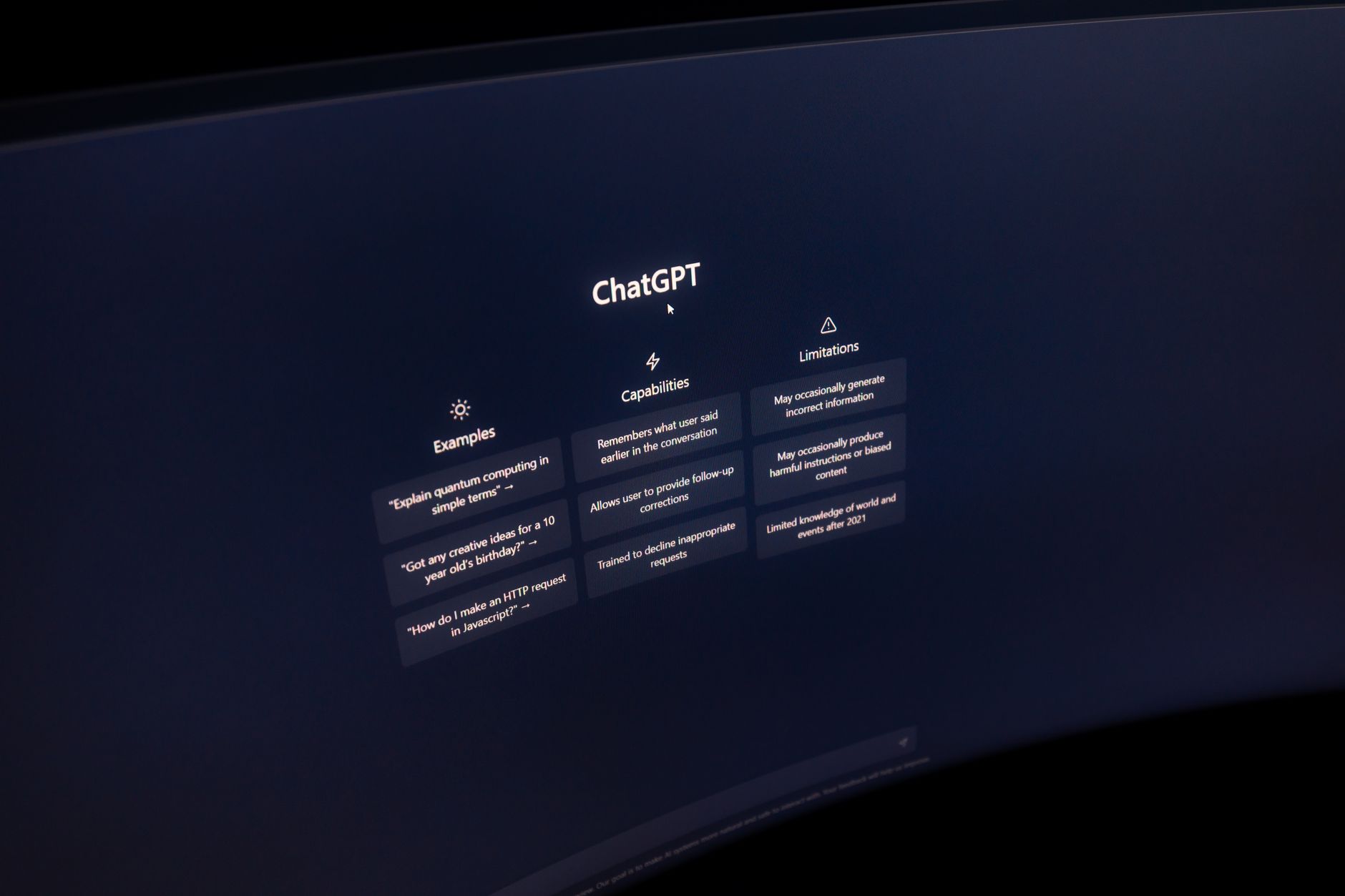
The transition from traditional algorithmic trading to agentic workflows represents a paradigm shift in how liquidity is captured. While legacy bots rely on static indicators like RSI or MACD, autonomous agents leverage generative AI integration to ingest news feeds, social sentiment, and on-chain data, synthesizing these inputs into actionable trade signals. This approach mimics the cognitive process of a human hedge fund analyst but operates at the millisecond scale required for modern digital asset markets.
Key takeaways
- LLMs act as reasoning engines, not direct executors.
- Use RAG for sentiment and Tool-use for execution.
- Deterministic guardrails must override AI decisions.
- Modular architecture is required to manage latency and risk.
The Architecture of Agentic Trading
A professional-grade autonomous system is not a single script; it is a distributed ecosystem. At the core is the 'Reasoning Engine,' typically powered by a high-context LLM. This engine does not execute trades directly; rather, it operates within a sandbox, processing inputs and outputting structured JSON objects that define a desired state (e.g., "Long BTC/USD at market price with a 2% stop-loss").
Surrounding this engine are three critical layers: the Data Ingestion Layer, the Execution Layer, and the Risk Guardrail Layer. The Data Ingestion Layer must handle both structured data (OHLCV, order books) and unstructured data (Twitter feeds, Fed announcements). The Execution Layer translates the LLM's intent into API calls via exchanges like Binance or Coinbase, while the Risk Guardrail Layer acts as a hard-coded circuit breaker that overrides the AI if it attempts to breach predefined capital allocation limits.
This modularity is essential for stability. As we explore how AI agents and RWA are revolutionizing wealth management, it becomes clear that the ability to decouple reasoning from execution is what allows these systems to scale without catastrophic failure modes.
Generative AI Integration Strategies
To build an effective ai trading bot for forex or crypto, one must choose between two primary integration patterns: RAG (Retrieval-Augmented Generation) and Agentic Tool-Use. RAG is best suited for sentiment analysis, where the agent queries a vector database of recent news to determine market bias. Tool-use, however, is where the real power lies; this is when the LLM is given access to specific functions, such as get_current_price() or calculate_volatility().
The most advanced workflows utilize a 'Chain-of-Thought' prompting technique. Instead of asking the model "Should I buy?", the workflow instructs the agent to "Analyze the correlation between the DXY and BTC, evaluate the current liquidity depth, and then propose a position size." This forced reasoning reduces the hallucination rate and ensures the agent's decisions are grounded in mathematical reality rather than linguistic patterns.
However, developers must be wary of latency. LLM inference times can range from hundreds of milliseconds to several seconds. For high-frequency execution, the LLM should only be used for high-level strategic shifts, while a low-latency C++ or Python-based execution engine handles the micro-adjustments within those strategic parameters.
Comparing Traditional vs. Autonomous Bots
Understanding the distinction between legacy automation and modern agentic workflows is vital for capital allocation. Traditional bots are deterministic; they follow a path. Autonomous agents are probabilistic; they navigate a landscape.
| Feature | Traditional Algorithmic Bot | Autonomous Crypto Trading Agent |
|---|---|---|
| Decision Logic | Hard-coded (If X > Y, then Buy) | Probabilistic (Contextual reasoning) |
| Data Input | Structured (Price/Volume only) | Hybrid (Price + Unstructured News/Sentiment) |
| Adaptability | Low (Requires manual recalibration) | High (Self-correcting via feedback loops) |
| Complexity | Low to Medium | High (Requires LLM orchestration) |
The Deployment Workflow
Deploying these agents requires a rigorous pipeline to prevent the "black box" problem, where an agent makes decisions that the operator cannot explain. A robust deployment follows a specific hierarchy of validation.
- Backtesting with Synthetic Data: Run the agent against historical data, but augment it with historical news sentiment to test the LLM's reasoning capabilities.
- Paper Trading (Forward Testing): Deploy the agent in a live environment using real-time data feeds but with zero capital at risk. This tests the latency of your API connections and the accuracy of your JSON parsing.
- Small-Cap Sandbox: Allocate a minimal percentage of capital (e.g., 0.5%) to test the agent's ability to handle slippage and real-world liquidity constraints.
- Full Production with Hard Guardrails: Scale capital only after the agent demonstrates consistent adherence to risk parameters.
Risk Management and Guardrails
In the realm of autonomous agents, risk management is not just a setting; it is a separate software layer. Because LLMs can occasionally hallucinate or enter feedback loops, you must implement 'Deterministic Overrides.' These are non-AI, hard-coded rules that exist outside the LLM's influence. For example, if the total account drawdown exceeds 5%, the API keys should be programmatically disabled via a separate script.
Furthermore, managing the tax implications of high-frequency agentic trading is a significant operational hurdle. As you scale, you must ensure your execution logs are granular enough for compliance. For those operating at scale, consulting an Institutional Guide to Navigating Crypto Tax Rules in 2026 is essential to ensure that the speed of your agent doesn't create an unmanageable reporting nightmare.
Finally, consider the risk of 'Model Drift.' As market regimes change (e.g., moving from a low-volatility trending market to a high-volatility mean-reverting market), an agent trained on previous data may fail. Continuous monitoring of the agent's 'Confidence Scores'—the probability the LLM assigns to its own decisions—can serve as an early warning system for when the model is out of its depth.
Technical Stack Recommendations
To build this, do not start from scratch. Utilize orchestration frameworks like LangChain or AutoGPT to manage the agentic loops. For the vector database, Pinecone or Weaviate are industry standards for storing and retrieving market sentiment embeddings. For the execution environment, containerized microservices via Docker and Kubernetes allow you to scale your data ingestion and reasoning engines independently.
If you are managing significant liquidity, you might also consider diversifying into more stable, yield-bearing assets during periods of high uncertainty. While not a replacement for active trading, understanding The 2026 Playbook for High Yield Savings Account can help you manage the 'dry powder' that your autonomous agents use to enter positions.
The bottom line
Deploying autonomous crypto trading agents is a move from being a trader to being an architect. The goal is not to find a "magic bot," but to build a robust, multi-layered system that combines the reasoning of generative AI with the unyielding discipline of deterministic code. Your next action: Begin by building a non-trading RAG pipeline that merely summarizes market sentiment. Once you can trust the agent's interpretation of the news, only then should you grant it the power to touch your API keys.
Frequently asked questions
+Can an AI trading bot replace a human trader?
An autonomous agent can replace the manual execution of specific strategies and the processing of vast datasets, but it cannot replace the high-level strategic oversight and risk management provided by a human. It is a tool for augmentation, not total replacement.
+What is the biggest risk in using LLMs for trading?
The primary risk is 'hallucination,' where the model perceives a pattern or news event that doesn't exist. This can lead to incorrect reasoning. To mitigate this, always use deterministic guardrails and hard-coded risk limits that the AI cannot bypass.
CF
Crypto Finance Editorial Desk
Crypto Finance's editorial desk pairs an AI research pipeline with human review so every article is accurate, useful and free of hype.
Related articles

Trading Strategies
AI-Driven Algorithmic Forex: LLM Integration Guides
Learn how to integrate LLMs into Forex trading by combining sentiment vectorization with quantitative models for a high-edge, API-driven algorithmic strategy.
Editorial DeskSep 2, 20265 min20
Trading Strategies
Stress-Testing AI Driven Forex Trading Strategies
Moving beyond simple backtesting: Learn how to stress-test AI-driven forex strategies using Monte Carlo simulations, regime-shift analysis, and macro-sensitivity testing.
Editorial DeskSep 2, 20265 min5

Trading Strategies
Carry Trade Strategy Guide: Swap Rates & Risk Controls for 2024
Master the carry trade strategy with our professional guide. Learn to screen G10/EM pairs, manage swap rate volatility, and implement institutional-grade risk controls.
Editorial DeskAug 30, 20266 min11