Stress-testing ai driven forex trading strategies requires moving beyond simple backtesting to implement Monte Carlo simulations, walk-forward analysis, and regime-shift sensitivity testing. To ensure robustness, a model must survive high-volatility "black swan" events and rapid shifts in central bank policy, rather than merely optimizing for historical mean reversion or trend-following patterns.
Stress-Testing AI Driven Forex Trading Strategies
Moving beyond simple backtesting: Learn how to stress-test AI-driven forex strategies using Monte Carlo simulations, regime-shift analysis, and macro-sensitivity testing.
Crypto Finance Editorial DeskPublished Sep 2, 2026Updated Sep 2, 20265 min read1,208 words1 views
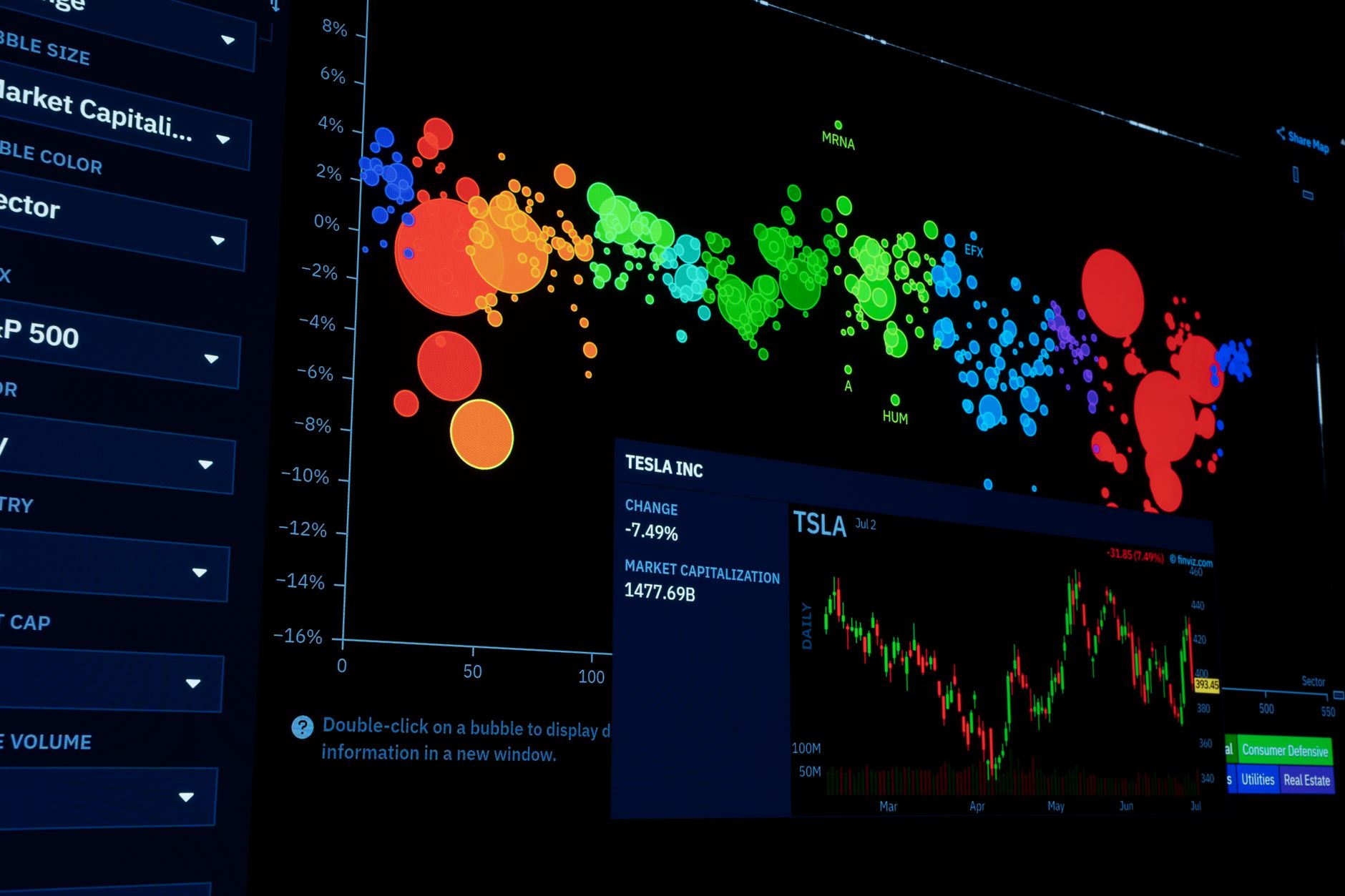
While the industry hype focuses on the predictive prowess of neural networks, professional quantitative desks know that a model's alpha is secondary to its fragility. An AI model that performs exceptionally in a low-volatility, trending EUR/USD environment may catastrophically fail during a sudden liquidity crunch or a hawkish pivot by the ECB. This article provides a technical framework for stress-testing these models to ensure they are institutional-grade.
Key takeaways
- Avoid curve-fitting by using walk-forward optimization instead of simple backtesting.
- Use Monte Carlo simulations with Student's t-distributions to model fat-tail risk.
- Implement hard-coded risk management rules independent of AI signal generation.
- Validate AI decisions using SHAP values to ensure economic logic holds.
The Illusion of Backtest Perfection
The most common failure in deploying ai driven forex trading strategies is over-optimization, often referred to as "curve fitting." When a deep learning model is trained on decades of tick data, it can inadvertently memorize specific historical noise rather than learning underlying market mechanics. This results in stellar backtested Sharpe ratios that evaporate the moment the model encounters live market data.
To combat this, we utilize walk-forward optimization. Instead of training on a single massive block of data, we use a rolling window approach: train on Year 1, test on Year 2; train on Year 1-2, test on Year 3. This simulates the reality of a trader constantly recalibrating to new information. If the performance decay between the training window and the out-of-sample window exceeds a predefined threshold (typically 25-30%), the model's logic is fundamentally flawed.
Furthermore, we must distinguish between predictive power and statistical significance. A model using predictive ai for macro analysis might identify a correlation between US Treasury yields and the USD/JPY pair, but if that correlation is driven by a single outlier event, the model is effectively a gambler. We apply the Diebold-Mariano test to compare our AI's forecast accuracy against a simple random walk to ensure the edge is real.
Simulating Tail Risk with Monte Carlo
Standard deviation is an insufficient measure of risk in Forex. Currency markets exhibit "fat tails" (leptokurtosis), meaning extreme price movements occur far more frequently than a normal distribution suggests. To stress-test an AI strategy, we must run Monte Carlo simulations that specifically target these tail events.
In our workflow, we do not just shuffle historical returns. Instead, we generate thousands of synthetic price paths using a Student's t-distribution, which allows for higher kurtosis. We then run the AI strategy against these synthetic paths to observe the maximum drawdown (MDD) and the probability of ruin. If a strategy shows a 5% probability of a 20% drawdown under normal conditions, the Monte Carlo simulation will reveal if that probability jumps to 25% during a simulated liquidity crisis.
This approach is critical when integrating AI agents and RWA into broader portfolio management. The interaction between automated FX execution and real-world asset liquidity can create feedback loops. Stress-testing ensures that the AI doesn't trigger a cascade of stop-losses during a period of thin order books.
Regime Shift Sensitivity Testing
Forex markets operate in distinct regimes: trending, mean-reverting, high-volatility, and low-volatility. An AI model trained predominantly on a low-volatility regime will lack the parameters to handle a sudden spike in the VIX or a geopolitical shock. We test for "regime robustness" by segmenting historical data into these specific buckets.
A robust strategy should demonstrate a predictable (even if lower) performance across all regimes. We use Hidden Markov Models (HMM) to automatically identify these regimes in historical data and then measure the model's performance within each. If the AI's win rate drops from 60% in trending markets to 30% in mean-reverting markets, the strategy requires a regime-switching component to toggle its logic.
| Metric | Standard Backtest | Stress-Tested AI Model | Why It Matters |
|---|---|---|---|
| Volatility Handling | Uses historical average | Simulated extreme spikes | Prevents liquidation during spikes |
| Correlation Analysis | Static correlation | Dynamic/Regime-based | Detects breakdown in FX pairs |
| Drawdown Profile | Historical maximum | Probabilistic (Monte Carlo) | Estimates "Black Swan" risk |
| Execution Lag | Zero/Minimal | Slippage & Latency modeled | Reflects real-world liquidity |
Integrating Forex Risk Management Rules
An AI model is not a complete strategy; it is merely a signal generator. A professional trading strategy requires hard-coded forex risk management rules that operate independently of the AI's output. This "circuit breaker" approach ensures that even if the AI enters a state of hallucination or logic failure, the capital is protected.
We implement three layers of risk defense:
- Position Sizing Limits: No single trade can exceed a fixed percentage of equity (e.g., 1-2%), regardless of the AI's confidence score.
- Correlation Caps: The system must limit exposure to highly correlated pairs (e.g., long EUR/USD and short USD/CHF) to prevent unintended directional bets.
- Hard Stop-Losses: Every AI-generated order must be accompanied by a non-negotiable stop-loss placed at the time of execution.
These rules act as the guardrails for the machine learning engine. While the AI seeks to optimize profit, the risk management layer seeks to minimize ruin. This distinction is what separates retail "bot" traders from institutional quantitative strategies.
Macro Analysis and Predictive AI
The next frontier in ai driven forex trading strategies is the integration of predictive ai for macro analysis. This involves feeding the model more than just price data; it includes NLP-processed central bank communications, inflation print surprises, and employment data. However, this adds a layer of complexity: "data drift."
When the relationship between a macro variable (like the CPI) and a currency pair changes—as it did during the post-pandemic inflationary surge—the AI's predictive model becomes obsolete. We stress-test this by performing "sensitivity analysis," where we manually perturb macro inputs (e.g., increasing the interest rate differential by 50bps) to see how the model's output shifts. If a small change in input leads to an explosive, irrational change in output, the model is too sensitive and requires regularization.
Technical Workflow for Robustness
To implement these tests, a quantitative developer should follow a rigorous pipeline. This isn't about finding the highest return; it's about finding the highest return per unit of unquantified risk.
- Data Sanitization: Remove outliers and handle missing tick data to prevent the AI from learning artifacts of bad data.
- Feature Importance Validation: Use SHAP (SHapley Additive exPlanations) values to ensure the AI is making decisions based on economically sound features.
- Latency Injection: Artificially delay order execution in the backtest to simulate the slippage found in high-volume trading environments.
- Capital Constraints: Simulate the impact of margin calls and varying leverage levels during high-volatility periods.
The bottom line
Stop optimizing for the past and start simulating the future. If you are building or deploying ai driven forex trading strategies, your primary metric should not be the Sharpe ratio, but the "Stress-Adjusted Return." A strategy with a 1.5 Sharpe ratio that survives a simulated 2008-style liquidity event is vastly superior to a 3.0 Sharpe ratio model that collapses under 5% volatility. Your next action: Implement a Monte Carlo simulation with a Student's t-distribution on your current model to identify your true tail-risk exposure.
Frequently asked questions
+Why is standard backtesting insufficient for AI forex models?
Standard backtesting often suffers from curve-fitting, where the AI learns historical noise rather than market signals. This leads to high theoretical returns that fail in live markets. Robust testing requires simulating regime shifts and extreme volatility events that aren't present in the training data.
+What is the role of SHAP values in trading strategies?
SHAP (SHapley Additive exPlanations) values help traders understand which specific inputs (e.g., interest rates or price momentum) are driving the AI's decision. This ensures the model is making trades based on sound economic drivers rather than statistical coincidences.
CF
Crypto Finance Editorial Desk
Crypto Finance's editorial desk pairs an AI research pipeline with human review so every article is accurate, useful and free of hype.
Related articles

Trading Strategies
AI-Driven Algorithmic Forex: LLM Integration Guides
Learn how to integrate LLMs into Forex trading by combining sentiment vectorization with quantitative models for a high-edge, API-driven algorithmic strategy.
Editorial DeskSep 2, 20265 min4
Trading Strategies
Carry Trade Strategy Guide: Swap Rates & Risk Controls for 2024
Master the carry trade strategy with our professional guide. Learn to screen G10/EM pairs, manage swap rate volatility, and implement institutional-grade risk controls.
Editorial DeskAug 30, 20266 min5
Trading Strategies
Carry Trade Strategy 2024: Rate Differentials & Risk Controls
Carry Trade Strategy: a practical, risk-aware guide covering costs, trade-offs, implementation steps and how to measure results within 90 days.
Editorial DeskAug 21, 20265 min15