To use LLMs for automated portfolio rebalancing, you must deploy them as reasoning engines rather than execution engines. By feeding real-time asset allocations and target weights into an LLM via API, you can automate the decision-making logic required to identify drift, calculate necessary trades, and generate execution scripts that interact with exchange APIs under strict, human-in-the-loop security protocols.
How to Use LLMs for Automated Portfolio Rebalancing
Learn how to bridge the gap between LLM reasoning and automated portfolio rebalancing. Discover technical workflows, security protocols, and risk-first implementation strategies.
Crypto Finance Editorial DeskPublished Sep 2, 2026Updated Sep 2, 20266 min read1,311 words0 views
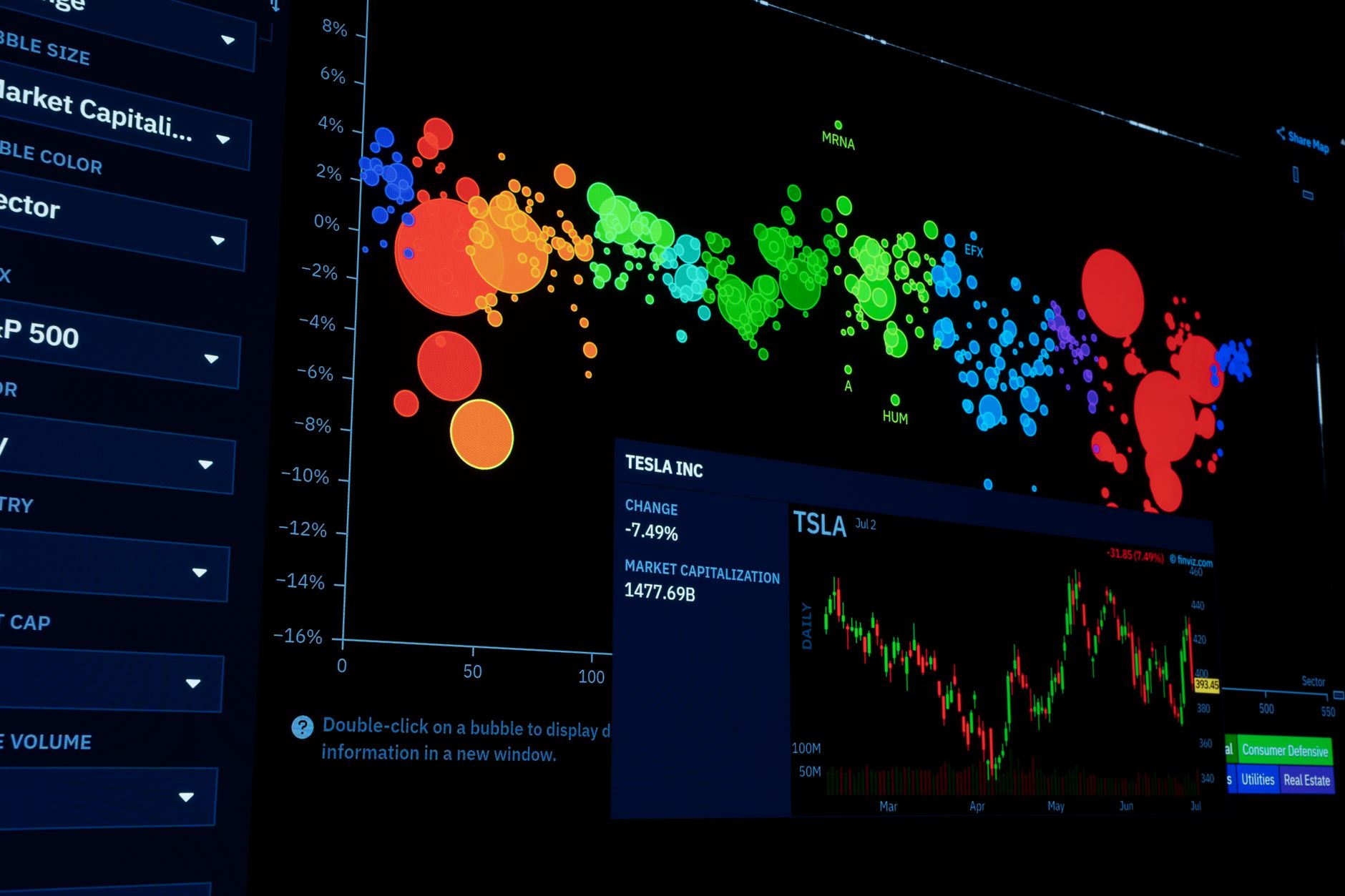
Traditional rebalancing relies on static thresholds—if an asset drifts 5% from its target, you trade. However, modern portfolio management requires more nuance. An LLM can ingest macro data, volatility indices, and liquidity constraints to suggest dynamic rebalancing windows. This bridges the gap between simple dollar cost averaging and sophisticated, context-aware wealth management. However, the transition from "AI advice" to "automated execution" introduces significant security risks that must be mitigated through architectural compartmentalization.
Key takeaways
- Use LLMs as reasoning engines, not execution engines, to prevent mathematical errors.
- Implement a three-tier architecture: Data Ingestion, LLM Reasoning, and Deterministic Execution.
- Apply Zero-Trust security using Read-Only and Restricted API keys.
- Always use a human-in-the-loop (HITL) approach during the initial deployment phase.
The Evolution of Rebalancing Strategies: From Static to Semantic
Historically, investors have relied on two primary methods: calendar rebalancing (e.g., every quarter) and threshold rebalancing (e.g., when an asset deviates by a set percentage). While effective, these methods are "blind." They do not account for market regime shifts or the tax implications of selling high-performing assets in a volatile climate. As we see in how AI agents and RWA are revolutionizing wealth management, the industry is moving toward intelligent, autonomous agents that understand the why behind a trade.
LLMs introduce "semantic rebalancing." Instead of just looking at numbers, an LLM-driven workflow can evaluate whether a portfolio's drift is due to a fundamental shift in an asset's value proposition or mere noise. For example, if a crypto asset's weight increases due to a massive rally, an LLM can cross-reference on-chain data and sentiment to determine if the rebalance should be aggressive (to lock in gains) or passive (to let a winner run), effectively optimizing the risk-adjusted return profile.
This approach moves beyond the rigid constraints of traditional portfolio rebalancing strategy. By integrating LLMs, the rebalancing logic becomes a living system that adapts to the volatility of the digital asset market, providing a level of sophistication previously reserved for institutional quantitative desks.
Architecting the LLM Rebalancing Workflow
A production-ready workflow for automated portfolio rebalancing AI requires a three-tier architecture: the Data Ingestion Layer, the Reasoning Layer (LLM), and the Execution Layer. You should never allow an LLM to hold private keys or have direct, unmonitored access to your exchange API. Instead, the LLM should act as the "brain" that outputs a JSON-formatted instruction set which is then validated by a deterministic script.
First, the Data Ingestion Layer pulls current holdings from your best crypto exchange platforms for high-volume traders and compares them against your target allocation. Second, the Reasoning Layer—utilizing a model like GPT-4o or Claude 3.5 Sonnet—receives this data along with current market context. The LLM's task is to output a specific trade list: "Sell 0.5 BTC, Buy 12 ETH".
Third, the Execution Layer is a non-AI, hard-coded Python script that receives the LLM's JSON output. This script performs a "sanity check" against your pre-defined risk parameters. If the LLM suggests a trade that exceeds a certain percentage of your total equity or violates a liquidity constraint, the script kills the process and alerts the user. This separation of concerns is the only way to ensure how to use llms for personal finance remains a tool for growth rather than a vector for catastrophic error.
Comparing Rebalancing Methodologies
To understand where LLMs add value, we must compare them against the standard industry practices used in both traditional and crypto-native portfolios.
| Methodology | Trigger Mechanism | Complexity | LLM Integration Potential |
|---|---|---|---|
| Calendar Rebalancing | Fixed Time Intervals | Low | Low (Redundant) |
| Threshold Rebalancing | Percentage Drift | Medium | Medium (Optimization) |
| Smart Rebalancing | Volatility/Macro Context | High | High (Core Engine) |
| LLM-Augmented Rebalancing | Semantic & Quantitative Drift | Very High | Native |
Security Protocols for AI-Driven Finance
The greatest barrier to automated portfolio rebalancing AI is the "black box" problem. If an LLM hallucinates a trade or misinterprets a decimal point, the financial consequences are immediate. To mitigate this, you must implement a Zero-Trust architecture for your financial agents.
One critical protocol is the use of Read-Only API Keys for the LLM's data ingestion phase. The LLM should only ever see your balances, never your ability to move them. When it comes to the execution phase, you must use Restricted API Keys that are limited to specific trading pairs and capped at a maximum daily volume. This prevents a compromised or malfunctioning AI from draining your entire portfolio into a single, illiquid asset.
"In the era of autonomous finance, the most important line of code is not the one that executes the trade, but the one that has the authority to veto it."
Furthermore, as you scale your automated strategies, you must remain cognizant of the regulatory landscape. For instance, as you automate trades, you must ensure your logs are sufficient for compliance, especially when navigating the institutional guide to navigating crypto tax rules in 2026. Automated rebalancing creates a high frequency of taxable events; your AI workflow must include a sub-routine that calculates the estimated tax impact before confirming a trade.
Implementation Checklist for Automated Rebalancing
If you are building a prototype to integrate LLMs into your personal or institutional portfolio strategy, follow this sequence to minimize technical debt and maximize security:
- Define Target Allocation: Establish your baseline (e.g., 60% BTC, 30% ETH, 10% SOL) and your maximum allowable drift (e.g., +/- 5%).
- Set Up Data Pipeline: Use CCXT or similar libraries to pull real-time pricing and balance data into a structured format (JSON).
- Engineer the LLM Prompt: Create a system prompt that instructs the LLM to act as a "Risk-Averse Quantitative Portfolio Manager." Provide it with clear constraints and a strict output schema.
- Build the Deterministic Validator: Write a Python script that checks the LLM's output against your hard limits (max trade size, max slippage, and minimum liquidity).
- Implement Human-in-the-Loop (HITL): For the first 30-90 days, the system should require manual approval via a Telegram or Discord bot before any trade is sent to the exchange.
- Audit and Iterate: Review the "reasoning" provided by the LLM against the actual market outcomes to refine your prompts.
Risks and Limitations of AI-Driven Management
While the potential for optimized returns is high, the risks are non-trivial. LLMs are probabilistic, not deterministic. They are designed to predict the next most likely token, not to perform perfect arithmetic. This makes them fundamentally ill-suited for the actual calculation of trade sizes. Never ask an LLM to calculate the exact amount of an asset to sell. Instead, provide the math to the LLM, and ask it to interpret the results, or use the LLM to decide if a trade should happen, and use a standard math library to decide how much.
Additionally, market liquidity is a significant constraint. An LLM might suggest rebalancing a large position in a mid-cap altcoin based on a 5% drift, but the resulting slippage could wipe out the benefit of the rebalance entirely. Your automated system must include a liquidity filter that checks the 24-hour volume of the target assets before proposing a trade.
The bottom line
LLMs are not a replacement for sound portfolio theory; they are a sophisticated interface for executing it. To successfully use LLMs for automated portfolio rebalancing, you must treat the AI as a strategic advisor and use hard-coded, deterministic code as the ultimate gatekeeper. Your next step should be to build a "Paper Trading" agent: a workflow that simulates rebalancing decisions based on real-time data without risking a single dollar of capital. Only once your AI's reasoning aligns with your risk tolerance should you move to restricted API execution.
Frequently asked questions
+Can I give an LLM my private keys for automated rebalancing?
No. You should never provide private keys or unrestricted API access to an LLM. Instead, use the LLM to generate trade instructions in JSON format, which are then processed by a secure, hard-coded script using restricted API keys.
+How does LLM rebalancing differ from Dollar Cost Averaging?
Dollar Cost Averaging (DCA) is a time-based, non-reactive strategy. LLM-driven rebalancing is a context-aware strategy that reacts to both quantitative drift (asset weights) and qualitative data (market sentiment and macro trends).
CF
Crypto Finance Editorial Desk
Crypto Finance's editorial desk pairs an AI research pipeline with human review so every article is accurate, useful and free of hype.
Related articles

Portfolio Strategy
Portfolio Rebalancing Strategy: Calendar vs Threshold Methods Compared
Portfolio Rebalancing Strategy: a practical, risk-aware guide covering costs, trade-offs, implementation steps and how to measure results within 90 days.
Editorial DeskAug 25, 20265 min16

Portfolio Strategy
Building a T-Bill Ladder for 5% Yield: 2025 Strategy Guide
Build an automated T-bill ladder yielding 4.5-5% APY using Public, Robinhood, or Wealthfront. Step-by-step guide beats savings accounts and Treasury ETFs for taxable cash.
Editorial DeskAug 22, 20265 min13

Portfolio Strategy
Bond Ladder Strategy Enhanced With Yield-Bearing Stablecoins
Apply corporate treasury frameworks to retail bond ladders using yield-bearing stablecoins as short-rung alternatives. Includes de-peg vs MMF break risk models, US GAAP accounting workflows, and audit-ready operational controls.
Editorial DeskAug 21, 20265 min7