Retail traders can leverage Large Language Models (LLMs) to bridge the gap between manual analysis and institutional-grade strategies by using them to convert unstructured sentiment data into structured quantitative signals and automating the generation of complex backtesting code. This allows the individual trader to scale their qualitative intuition into a systematic, machine-readable framework.
Using LLMs for Quantitative Retail Algorithmic Trading
Discover how retail traders can leverage Large Language Models (LLMs) to bridge the gap between manual technical analysis and institutional-grade quantitative strategies.
Crypto Finance Editorial DeskPublished Aug 14, 2026Updated Aug 14, 20265 min read1,042 words3 views
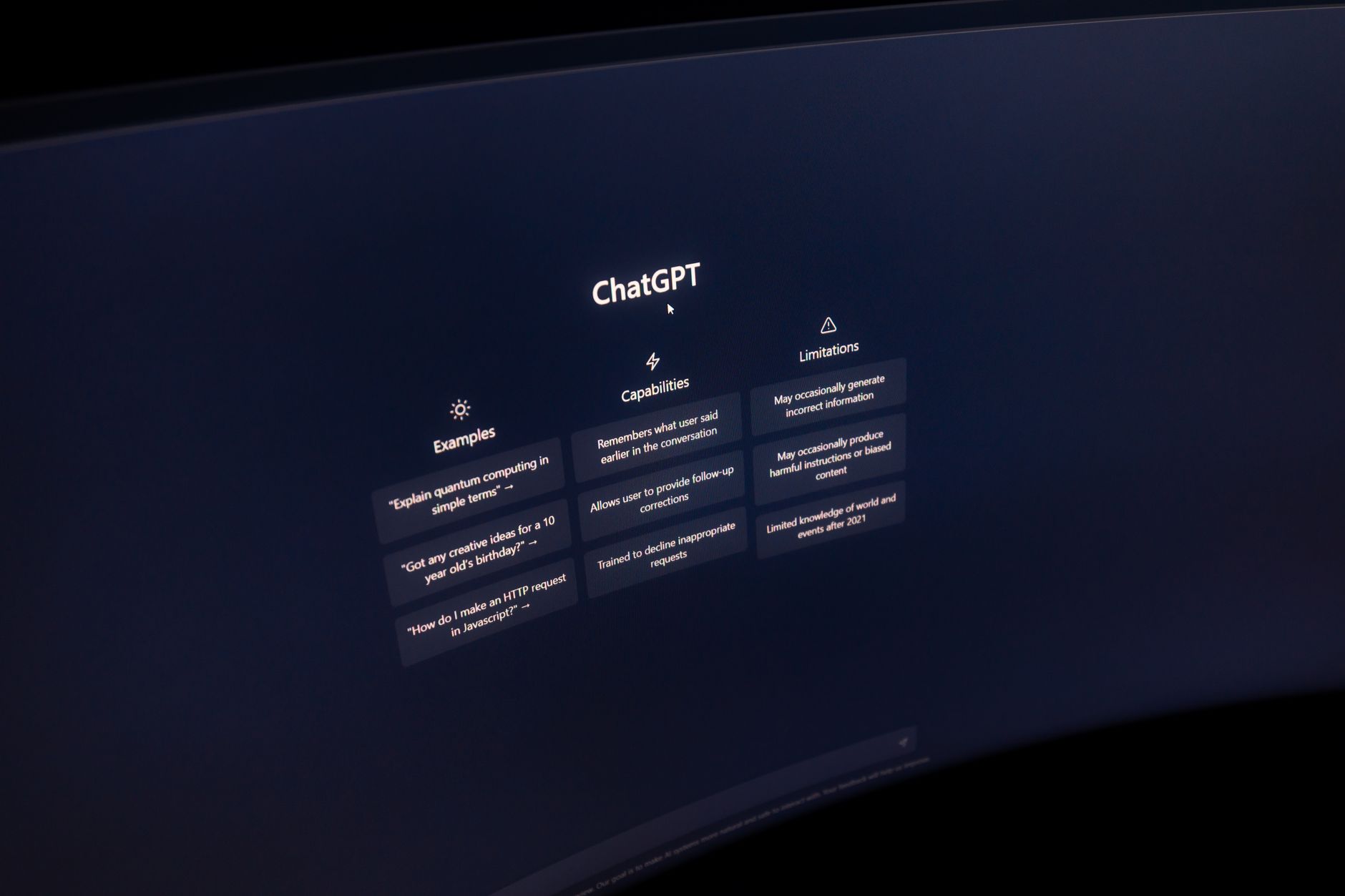
For years, the divide between the 'discretionary trader' and the 'quant' has been defined by access to compute power and engineering talent. The discretionary trader relies on charts and gut feeling, while the institutional quant relies on high-frequency data and complex mathematical models. LLM algorithmic trading offers a middle ground, providing a cognitive layer that can parse the chaos of the crypto markets into actionable data points.
This is not about asking ChatGPT to "predict the price of Bitcoin." That is a recipe for financial ruin. Instead, it is about using LLMs as a sophisticated reasoning engine to augment your machine learning trading workflows. By integrating LLMs into your pipeline, you move from reactive trading to proactive, data-driven execution.
Key takeaways
- LLMs transform unstructured sentiment into structured trading signals.
- Retail traders can use LLMs to automate code generation for backtesting.
- Combining LLMs with traditional quantitative analysis mitigates 'hallucination' risks.
- LLMs act as a bridge between qualitative news and quantitative execution.
The Shift from Discretionary to Augmented Quant
Traditional technical analysis (TA) is inherently limited by human cognitive bandwidth. A trader can monitor ten charts, perhaps twenty, before fatigue sets in. An LLM-augmented system, however, can monitor thousands of data streams simultaneously—ranging from Telegram group sentiments to SEC filings and developer activity on GitHub.
The goal of quantitative analysis for retail traders is to move away from "feeling" a trend and toward "measuring" it. LLMs facilitate this by acting as a translation layer. They take the messy, linguistic reality of the markets and turn it into a numerical score. For example, instead of reading a news headline and deciding if it is "bullish," an LLM can assign a sentiment score from -1 to 1, which then feeds directly into your existing quantitative model.
This approach mirrors how AI agents and RWA are revolutionizing wealth management at the institutional level. By automating the interpretation of qualitative data, you are essentially building a mini-hedge fund infrastructure on a retail budget.
LLMs as Feature Engineers
In machine learning, a "feature" is an individual measurable property or characteristic of a phenomenon being observed. In trading, features are the inputs to your models: moving averages, RSI, volatility, etc. Historically, these have all been numerical. The new frontier is "textual features."
Using an LLM, you can create features such as "Regulatory Sentiment Index" or "Developer Activity Velocity." By feeding these text-derived features into a traditional XGBoost or LSTM model, you provide your algorithm with context that price data alone cannot provide. This is how you gain an edge in the highly sentiment-driven crypto markets.
However, caution is required. LLMs are prone to hallucinations. If you feed an LLM a corrupted news feed, it will generate corrupted features. Your pipeline must include a verification step where the LLM's output is cross-referenced against a secondary, high-integrity data source to ensure the signal is grounded in reality.
Automating the Backtesting Pipeline
One of the biggest hurdles for retail traders attempting to build AI trading bots is the coding barrier. Writing robust, bug-free Python code for backtesting a strategy requires significant time and expertise. LLMs have fundamentally changed this dynamic by acting as highly competent coding assistants.
Rather than writing every line of code from scratch, a modern retail quant uses LLMs to scaffold their entire testing environment. You can describe a strategy in natural language—"Create a backtest for a mean-reversion strategy using Bollinger Bands on 4-hour ETH/USDT pairs, accounting for a 0.1% taker fee"—and receive a functional Python script using libraries like Backtrader or VectorBT.
"The true power of LLMs in trading is not in their ability to predict the future, but in their ability to drastically compress the time between a hypothesis and a validated backtest."
This speed allows for much more rigorous experimentation. You can iterate through dozens of parameter combinations in the time it used to take to write a single script. This rapid iteration is the cornerstone of successful machine learning trading.
Comparing Trading Methodologies
To understand where LLMs fit, we must compare the traditional retail approach with the new LLM-augmented quantitative approach.
| Feature | Traditional Retail TA | LLM-Augmented Quant | Institutional Quant |
|---|---|---|---|
| Data Source | Price/Volume Charts | Price + Unstructured Text | Multi-modal + High-Frequency |
| Decision Speed | Slow (Manual) | Medium (Automated) | Ultra-Fast (HFT) |
| Scalability | Low (Human Limited) | High (API Driven) | Extreme (Server Farms) |
| Complexity | Low | Medium-High | Very High |
Implementation Checklist for Retail Quants
If you are ready to transition from manual trading to an LLM-integrated quantitative workflow, follow this structured approach to minimize risk and maximize learning.
- Define the Hypothesis: Do not start with the tool; start with the idea. (e.g., "Twitter sentiment precedes price breakouts in mid-cap altcoins").
- Data Acquisition: Set up APIs for both market data (e.g., Best Crypto Exchange Platforms for High-Volume Traders) and textual data (X, News APIs, Discord).
- LLM Feature Extraction: Use an LLM to process text into a structured CSV of sentiment scores.
- Model Integration: Feed both the sentiment scores and the price data into a machine learning model.
- Rigorous Backtesting: Use LLM-generated code to test your hypothesis across multiple market cycles.
- Paper Trading: Run the bot in a live environment with fake money for at least two weeks to observe real-world latency and slippage.
Managing Risk and Compliance
The transition to algorithmic trading introduces new, non-obvious risks. The most significant is "model drift," where an LLM's interpretation of language changes as the model is updated by its provider (e.g., OpenAI or Anthropic). A prompt that worked in January might produce different sentiment scores in June, potentially breaking your trading logic.
Furthermore, as your strategies become more complex, your regulatory obligations increase. While you are trading as a retail entity, the automation of your strategies means you must maintain clear logs of your decision-making processes. This is especially important for long-term planning, such as understanding your Institutional Guide to Navigating Crypto Tax Rules in 2026, where automated trades can create a massive, complex tax footprint.
Finally, never ignore the
Frequently asked questions
+Can LLMs replace traditional quantitative models?
No. LLMs are best used as feature extractors or code assistants. They excel at processing unstructured data like news or social sentiment, but they lack the mathematical precision of traditional statistical models used for price prediction and risk management.
+What are the risks of using AI trading bots?
The primary risks include model hallucination, overfitting to historical data, and latency issues. Retail traders must always validate LLM-generated code and ensure their strategies are tested against real-world market volatility before deploying capital.
CF
Crypto Finance Editorial Desk
Crypto Finance's editorial desk pairs an AI research pipeline with human review so every article is accurate, useful and free of hype.
Related articles

Trading Strategies
Is Portfolio Rebalancing Strategy Worth It? A Data-Led Answer
Portfolio Rebalancing Strategy: a practical, risk-aware guide covering costs, trade-offs, implementation steps and how to measure results within 90 days.
Editorial DeskAug 13, 20265 min4

Trading Strategies
Is Eur Usd Forecast Worth It? A Data-Led Answer
Eur Usd Forecast: a practical, risk-aware guide covering costs, trade-offs, implementation steps and how to measure results within 90 days.
Editorial DeskAug 13, 20265 min6

Trading Strategies
Is Rag Pipeline Tutorial Worth It? A Data-Led Answer
Rag Pipeline Tutorial: a practical, risk-aware guide covering costs, trade-offs, implementation steps and how to measure results within 90 days.
Editorial DeskAug 13, 20265 min12