Predictive AI models enhance ESG investing fund performance by converting unstructured non-financial data into quantifiable risk-adjusted signals, allowing managers to identify alpha in sustainability trends before they are priced into the market. By bridging the gap between qualitative ESG disclosures and quantitative price action, machine learning mitigates the "greenwashing" risk that often plagues traditional ESG portfolios.
Predictive AI Models for ESG Fund Performance
Discover how predictive AI models and machine learning are transforming ESG investing fund performance by turning unstructured data into actionable alpha signals.
Crypto Finance Editorial DeskPublished Aug 9, 2026Updated Aug 9, 20265 min read1,183 words23 views
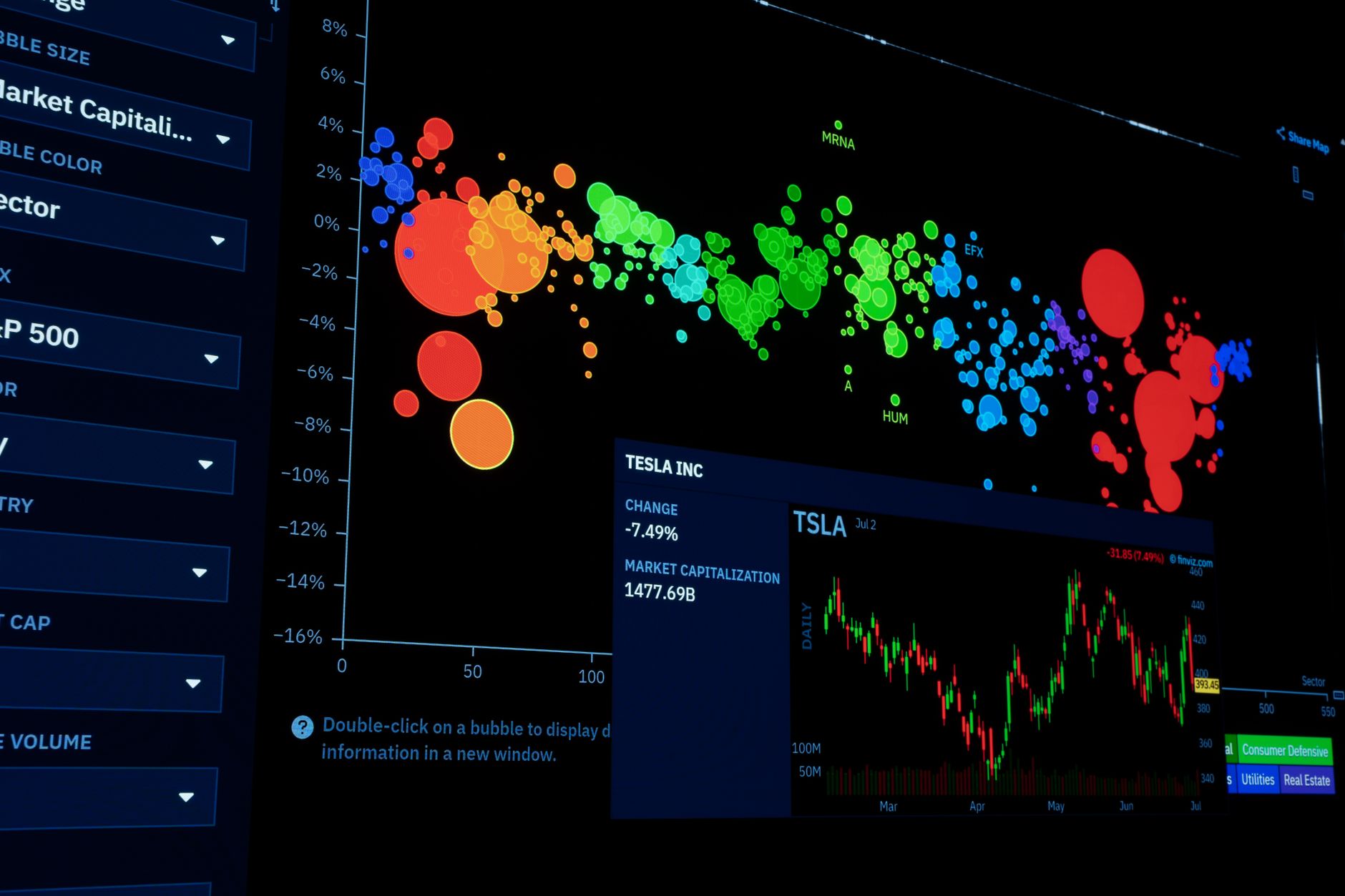
For decades, ESG integration was hampered by the "data lag" problem: ESG scores were often retrospective, based on annual reports that were months or years out of date. In the modern high-frequency environment, this latency is a liability. Today, the frontier of portfolio strategy lies in the synthesis of real-time alternative data—satellite imagery, sentiment analysis, and supply chain telemetry—processed through predictive financial modeling software to forecast how environmental and social shifts will impact long-term valuation.
Key takeaways
- AI converts lagging ESG disclosures into leading predictive signals.
- Predictive modeling mitigates greenwashing risk via third-party data verification.
- Alternative data like satellite imagery is crucial for physical risk modeling.
- A 'human-in-the-loop' approach is required to manage AI interpretability risks.
The Data Gap in Traditional ESG
Traditional ESG evaluation relies heavily on self-reported corporate disclosures. This creates a fundamental structural weakness: the data is subjective, often optimized for public relations, and lacks the granular velocity required for active management. When a fund relies on static ESG ratings, it is essentially driving a car while looking only at the rearview mirror.
The primary challenge for modern fund managers is that ESG metrics are often "noisy." A high social score might mask a catastrophic environmental risk hidden deep within a Tier-3 supplier's operations. Without advanced AI wealth management tools, these correlations remain invisible to the human analyst, leading to unexpected volatility when ESG-related scandals break.
To solve this, sophisticated desks are moving toward "Natural Language Processing" (NLP) to scrape news, regulatory filings, and even employee reviews in real-time. This transforms ESG from a compliance checkbox into a predictive alpha factor. By quantifying the sentiment around a company's climate transition plan, models can predict stock price sensitivity to upcoming carbon tax legislation or shifts in consumer preference.
How Predictive Modeling Drives Alpha
The link between ESG investing fund performance and AI is found in the ability to model non-linear relationships. Traditional linear regression models struggle to account for the complex interplay between a company's carbon footprint and its cost of capital. AI-driven models, however, excel at identifying these multi-dimensional dependencies.
For instance, a predictive model can ingest data regarding water scarcity in a specific geographic region and cross-reference it with the production capacities of semiconductor manufacturers in that zone. This allows a portfolio manager to hedge against climate-driven supply chain disruptions months before they manifest in earnings reports. This is not just risk mitigation; it is the proactive capture of alpha.
"The future of ESG is not in the rating itself, but in the predictive delta between a company's stated sustainability goals and its real-time operational footprint as captured by machine learning."
This shift represents a transition from "static ESG" to "dynamic ESG." While static ESG asks, "Is this company good?", dynamic ESG asks, "How will this company's environmental footprint impact its cash flow in the next 18 months?" This distinction is what separates lagging index funds from leading active strategies.
Comparing Traditional vs. AI-Driven ESG Strategies
To understand the impact on performance, we must compare the methodologies. Traditional methods are reactive, while AI-driven methods are proactive. The following table outlines the core differences in how these strategies approach the market.
| Feature | Traditional ESG Approach | AI-Driven ESG Strategy |
|---|---|---|
| Data Source | Annual Sustainability Reports | Real-time Satellite, NLP, & IoT |
| Time Horizon | Retrospective (Lagging) | Predictive (Leading) |
| Risk Detection | Manual/Qualitative Assessment | Automated Anomaly Detection |
| Alpha Generation | Limited (Beta-heavy) | High (Factor-based Alpha) |
| Greenwashing Risk | High (Relies on self-reporting) | Low (Verifies via third-party data) |
Integrating Alternative Data Streams
The true power of predictive financial modeling software in the ESG space comes from the ingestion of alternative data. This includes satellite imagery used to monitor deforestation or methane leaks, and geospatial data to track ocean temperatures or drought conditions. When these physical risks are mapped against the assets of a global portfolio, the predictive accuracy increases exponentially.
Furthermore, social (the "S" in ESG) is notoriously difficult to quantify. AI agents are now being deployed to monitor labor relations through vast datasets of social media, glassdoor reviews, and local news in multiple languages. This provides an early warning system for social unrest or labor strikes that could jeopardize operational continuity.
As we see more integration between digital assets and traditional finance, the convergence of AI agents and RWA are revolutionizing wealth management, providing even more granular ways to track and verify real-world ESG impact through blockchain-based provenance. This creates a feedback loop where the data is both predictive and immutable.
Implementation Checklist for Fund Managers
Transitioning to an AI-enhanced ESG strategy requires more than just buying software; it requires a fundamental shift in data architecture. Managers must ensure their tech stack can handle the velocity and variety of the data required.
- Audit Data Lineage: Ensure that your ESG data providers are using verifiable, third-party sources rather than solely relying on corporate disclosures.
- Test for Model Overfitting: When using predictive financial modeling software, ensure the model isn't simply memorizing historical ESG trends that may not repeat in a changing regulatory climate.
- Incorporate Geospatial Intelligence: Integrate satellite and climate-risk data to ground your ESG scores in physical reality.
- Monitor Sentiment Volatility: Use NLP tools to track the delta between a company's ESG narrative and the actual public sentiment.
- Backtest with Non-Linear Scenarios: Run stress tests using extreme climate and social scenarios to see how the portfolio reacts to "Black Swan" ESG events.
Risks and Limitations of AI-ESG
Despite the advantages, reliance on AI for ESG performance introduces unique risks. The "Black Box" problem is significant: if an AI model flags a company as high-risk due to an ESG anomaly, the fund manager must be able to explain *why* to institutional clients and regulators. Without interpretability, the model is a liability during a compliance audit.
There is also the risk of "data bias." If the training data for a predictive model is sourced from regions with high reporting standards (like the EU), the model may unfairly penalize or reward companies in emerging markets where data is sparse but growth potential is high. This can lead to unintended geographic concentration in a portfolio.
Finally, we must acknowledge that AI is a tool, not a replacement for human judgment. While AI can process millions of data points, it cannot understand the nuance of geopolitical shifts or the subtle changes in global regulatory intent. A hybrid approach—"Human-in-the-loop" AI—remains the gold standard for institutional-grade ESG investing.
The bottom line
To maximize ESG investing fund performance, portfolio managers must move beyond static scoring and embrace predictive, AI-driven modeling. The ability to transform unstructured environmental and social data into actionable, leading indicators is the new competitive moat in wealth management. Your next action: Conduct a gap analysis of your current ESG data stack to determine if you are relying on lagging disclosures or leading predictive signals.
Frequently asked questions
+How does AI improve ESG investing fund performance?
AI improves performance by replacing static, retrospective ESG scores with real-time, predictive models. By analyzing alternative data like satellite imagery and NLP-driven sentiment analysis, AI can identify ESG-related risks and opportunities before they are reflected in traditional financial statements.
+What are the risks of using AI for ESG modeling?
Key risks include the 'black box' problem (lack of model interpretability), data bias from uneven global reporting standards, and the potential for overfitting models to historical data that may not account for future climate or regulatory shifts.
CF
Crypto Finance Editorial Desk
Crypto Finance's editorial desk pairs an AI research pipeline with human review so every article is accurate, useful and free of hype.
Related articles
Portfolio Strategy
How to Use LLMs for Automated Portfolio Rebalancing
Learn how to bridge the gap between LLM reasoning and automated portfolio rebalancing. Discover technical workflows, security protocols, and risk-first implementation strategies.
Editorial DeskSep 2, 20266 min8

Portfolio Strategy
Portfolio Rebalancing Strategy: Calendar vs Threshold Methods Compared
Portfolio Rebalancing Strategy: a practical, risk-aware guide covering costs, trade-offs, implementation steps and how to measure results within 90 days.
Editorial DeskAug 25, 20265 min22

Portfolio Strategy
Building a T-Bill Ladder for 5% Yield: 2025 Strategy Guide
Build an automated T-bill ladder yielding 4.5-5% APY using Public, Robinhood, or Wealthfront. Step-by-step guide beats savings accounts and Treasury ETFs for taxable cash.
Editorial DeskAug 22, 20265 min18