AI sentiment analysis drives Forex volatility by converting unstructured qualitative data—such as central bank speeches, geopolitical news, and social media trends—into quantitative signals that trigger massive, high-speed liquidity shifts. When NLP models detect a shift in tone from a Federal Reserve official, algorithmic engines execute trades instantly, creating the rapid price swings characteristic of modern currency markets.
How AI Sentiment Analysis Drives Forex Volatility
Discover how NLP-driven sentiment analysis is transforming Forex trading, triggering massive currency volatility, and redefining the speed of algorithmic forex markets.
Crypto Finance Editorial DeskPublished Aug 10, 2026Updated Aug 10, 20265 min read1,157 words23 views
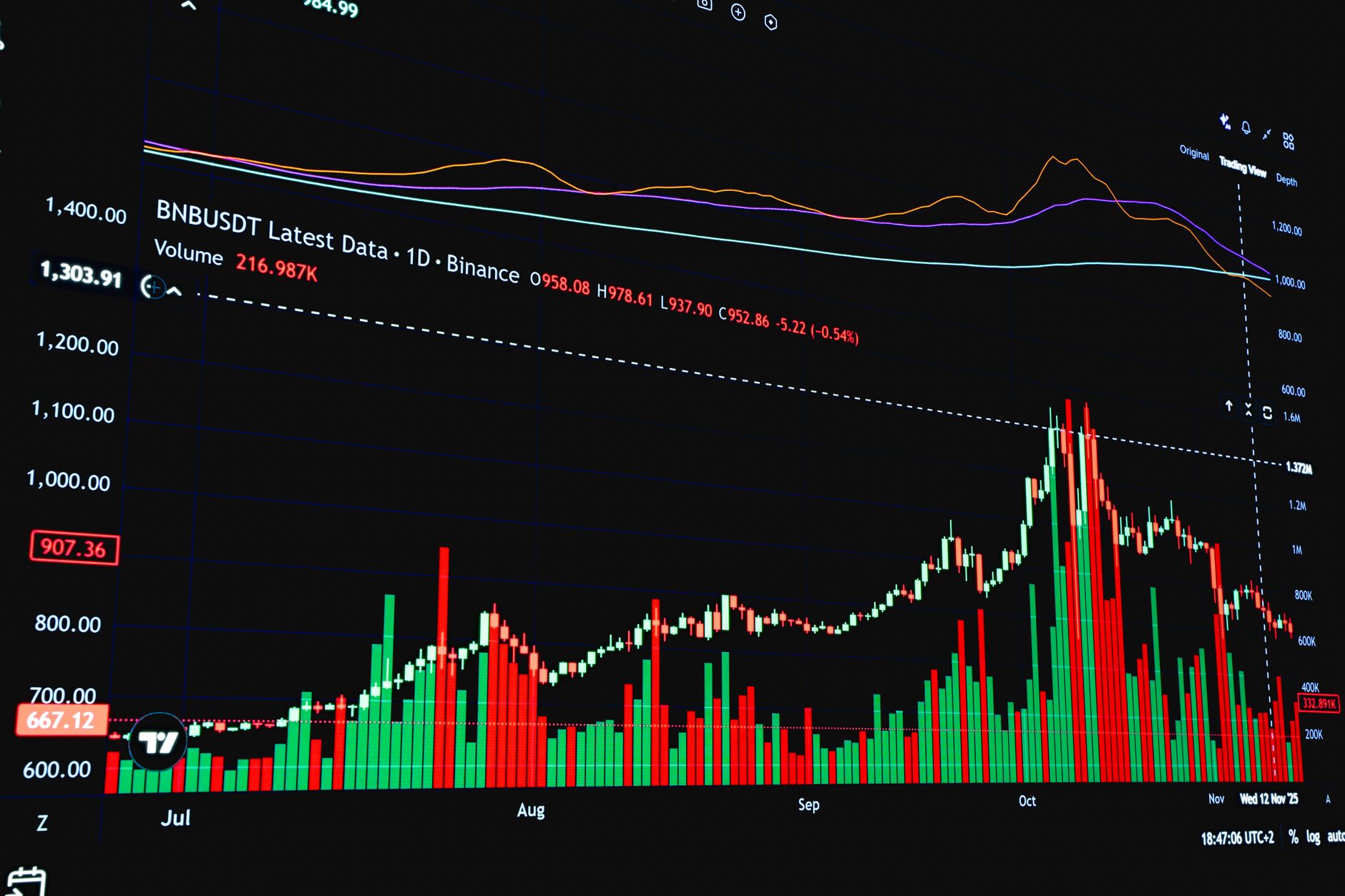
In the traditional era of FX trading, market sentiment was a lagging indicator, measured through retail positioning reports or slow-moving economic calendars. Today, the intersection of Natural Language Processing (NLP) and high-frequency trading has fundamentally altered the velocity of information. We are no longer just trading interest rate differentials; we are trading the perception of those rates, processed through silicon at microsecond speeds.
Key takeaways
- AI converts unstructured text into quantitative trade signals.
- NLP models trigger volatility by reacting to central bank nuances.
- Algorithmic homogeneity can lead to liquidity cascades and flash crashes.
- Successful sentiment trading requires high-fidelity data and rigorous backtesting.
The Mechanics of NLP Trading: From Text to Trade
At the core of this revolution is NLP trading, a subset of algorithmic forex where machines do more than just read numbers. While traditional quantitative models focus on price action and volume, NLP-driven systems ingest vast quantities of unstructured text. This includes Bloomberg terminal headlines, Reuters news wires, central bank transcripts, and even the subtle nuances of a Governor's hesitation during a press conference.
These models utilize transformer architectures—similar to the technology powering large language models—to perform "sentiment scoring." The AI assigns a numerical value to text, ranging from highly hawkish (bullish for the currency) to deeply dovish (bearish). This score is then fed directly into execution algorithms. The result is a feedback loop: news breaks, the AI interprets the sentiment, and the market moves before a human trader has even finished reading the headline.
This capability creates a bridge between macroeconomics and micro-execution. For instance, if an NLP model detects a shift in the linguistic nuance regarding "inflationary pressures" in a central bank statement, it can trigger a currency volatility event by anticipating the market's reaction to a potential rate hike. This is where the cross-sector intersection of AI and finance becomes most visible.
Why Sentiment Triggers Currency Volatility
Currency volatility is rarely a product of a single event; it is a product of the gap between expectation and reality. In the modern landscape, AI sentiment analysis narrows this gap, but it also introduces a new type of "algorithmic volatility." When multiple institutional models are trained on similar datasets, they often reach the same sentiment conclusion simultaneously, leading to massive, concentrated liquidity grabs.
This phenomenon is often seen during "news spikes." When a high-impact economic release occurs, the initial volatility is driven by the delta between the actual data and the consensus. However, the secondary, often more sustained wave of volatility is driven by the AI's interpretation of the qualitative commentary surrounding that data. If the data is good but the sentiment analysis of the accompanying speech is negative, the currency may experience a violent reversal.
Furthermore, the rise of social media sentiment has added a layer of retail-driven volatility to the professional landscape. While institutional players focus on high-fidelity news, the "noise" from social platforms can trigger momentum-based algorithms that hunt for volatility, further amplifying the swings in major pairs like EUR/USD or USD/JPY.
Comparing Traditional vs. AI-Driven Sentiment Analysis
To understand the paradigm shift, we must compare how sentiment was historically handled versus the current AI-integrated approach. The following table illustrates the qualitative shift in market participation.
| Feature | Traditional Sentiment Analysis | AI-Driven Forex Sentiment |
|---|---|---|
| Data Source | Economic Calendars & Retail Reports | Real-time News, Transcripts, & Social Media |
| Processing Speed | Minutes to Hours (Human-led) | Milliseconds (Machine-led) |
| Data Type | Structured (Numbers/Dates) | Unstructured (Natural Language) |
| Volatility Impact | Reactive (Follows the trend) | Predictive/Proactive (Triggers the trend) |
| Complexity | Linear/Single-variable | Non-linear/Multivariate |
The Role of Algorithmic Forex in Market Structure
Algorithmic forex is the engine that consumes the fuel provided by sentiment analysis. Without the ability to execute at scale, sentiment signals would remain mere observations. Today, these algorithms are designed to hunt for "sentiment imbalances." When the AI identifies a sudden divergence between price action and sentiment, it identifies a potential arbitrage or momentum opportunity.
This creates a highly efficient, yet highly sensitive, market. As we see more integration of AI in other sectors, such as how AI agents and RWA are revolutionizing wealth management, the sophistication of these forex algorithms will only increase. We are moving toward a "self-correcting" market where sentiment and price are reconciled with near-instantaneous precision.
However, this efficiency comes with systemic risks. The homogeneity of AI models—where many firms use similar NLP architectures—can lead to "flash crashes" in specific currency pairs. If a major news event is misinterpreted by a dominant sentiment model, the resulting algorithmic cascade can wipe out liquidity in seconds.
Implementing Sentiment-Based Strategies: A Professional Checklist
For traders looking to integrate these insights, it is vital to move beyond simple "mood" reading and toward rigorous quantitative integration. A successful strategy requires a multi-layered approach to data and risk.
- Identify High-Fidelity Data Streams: Prioritize direct news wires (Bloomberg, Reuters) over social media to minimize "noise" in your NLP models.
- Quantify Nuance: Ensure your sentiment model distinguishes between "hawkish," "neutral," and "dovish" rather than just "positive" or "negative."
- Backtest Against Volatility Spikes: Test your sentiment signals specifically against historical periods of high currency volatility to ensure they aren't just lagging indicators.
- Implement Liquidity Filters: Avoid executing large sentiment-based trades during periods of extreme spread widening, as the cost of entry can negate the alpha.
- Monitor Model Drift: Regularly audit your NLP models to ensure they are still interpreting modern linguistic trends accurately.
The Risks: When AI Misreads the Room
It is a mistake to view AI sentiment analysis as a crystal ball. AI models are inherently limited by the data they are trained on. They struggle with sarcasm, cultural idioms, and, most importantly, "black swan" events that have no linguistic precedent. If a geopolitical event occurs that is entirely unprecedented, the AI may default to a sentiment score that is fundamentally disconnected from the reality of the situation.
Furthermore, the "crowded trade" risk is real. If every major hedge fund is using similar NLP sentiment parameters to trade the USD, the market becomes brittle. Any slight deviation from the expected sentiment can cause an outsized reaction, leading to extreme currency volatility that can catch even sophisticated algorithmic traders off guard.
The bottom line
Forex sentiment analysis is no longer an optional tool for the elite; it is the foundational layer of modern currency market dynamics. To navigate this landscape, traders must transition from analyzing what happened to analyzing how the world perceives what happened. Your next action: Begin auditing your current trading workflow to identify where qualitative news data is being ignored in favor of purely technical indicators. Integrating even a basic sentiment overlay can provide the necessary context to survive the next volatility spike.
Frequently asked questions
+What is NLP trading in the context of Forex?
NLP (Natural Language Processing) trading involves using AI to analyze unstructured text data, such as news headlines and central bank speeches, to derive sentiment scores. These scores are then used by algorithmic forex systems to execute trades based on the perceived market mood.
+Does AI sentiment analysis increase Forex volatility?
Yes. By enabling near-instantaneous reaction to news, AI models can cause rapid, concentrated liquidity shifts. When multiple algorithms react to the same sentiment signal simultaneously, it can amplify price swings and create significant currency volatility.
+Can AI sentiment analysis predict market moves?
While AI can identify sentiment shifts that precede price movements, it is not a perfect predictor. AI can misinterpret nuance or fail during unprecedented 'black swan' events, meaning it should be used as a contextual tool rather than a guaranteed signal.
CF
Crypto Finance Editorial Desk
Crypto Finance's editorial desk pairs an AI research pipeline with human review so every article is accurate, useful and free of hype.
Related articles

Forex Trading
Spread Vs Commission: A Practical Guide for 2026
Spread Vs Commission: a practical, risk-aware guide covering costs, trade-offs, implementation steps and how to measure results within 90 days.
Editorial DeskAug 18, 20265 min23
Forex Trading
AI Agents for Forex Volatility: Performance vs Human Traders
A technical benchmark comparing AI agents for forex volatility against human traders, analyzing execution speed, emotional bias, and performance in high-volatility pairs.
Editorial DeskAug 16, 20265 min27
Forex Trading
Algorithmic Forex Software vs Human Trader Performance
Explore the performance gap between algorithmic forex trading software and human traders. Discover how AI bots manage risk during high volatility and market shifts.
Editorial DeskAug 15, 20265 min22