Generative AI achieves real-time algorithmic execution in Forex by utilizing Large Language Models (LLMs) as reasoning engines that translate unstructured sentiment and structured price telemetry into precise execution logic. Unlike traditional bots that rely on static IF-THEN rules, these systems interpret the nuance of macroeconomic shifts and liquidity fluctuations to adjust entry and exit parameters dynamically.
Generative AI in Forex: Real-Time Algorithmic Execution
Discover how Generative AI is revolutionizing Forex through real-time algorithmic execution, bridging the gap between semantic news analysis and high-frequency trading.
Crypto Finance Editorial DeskPublished Aug 11, 2026Updated Aug 11, 20266 min read1,216 words25 views
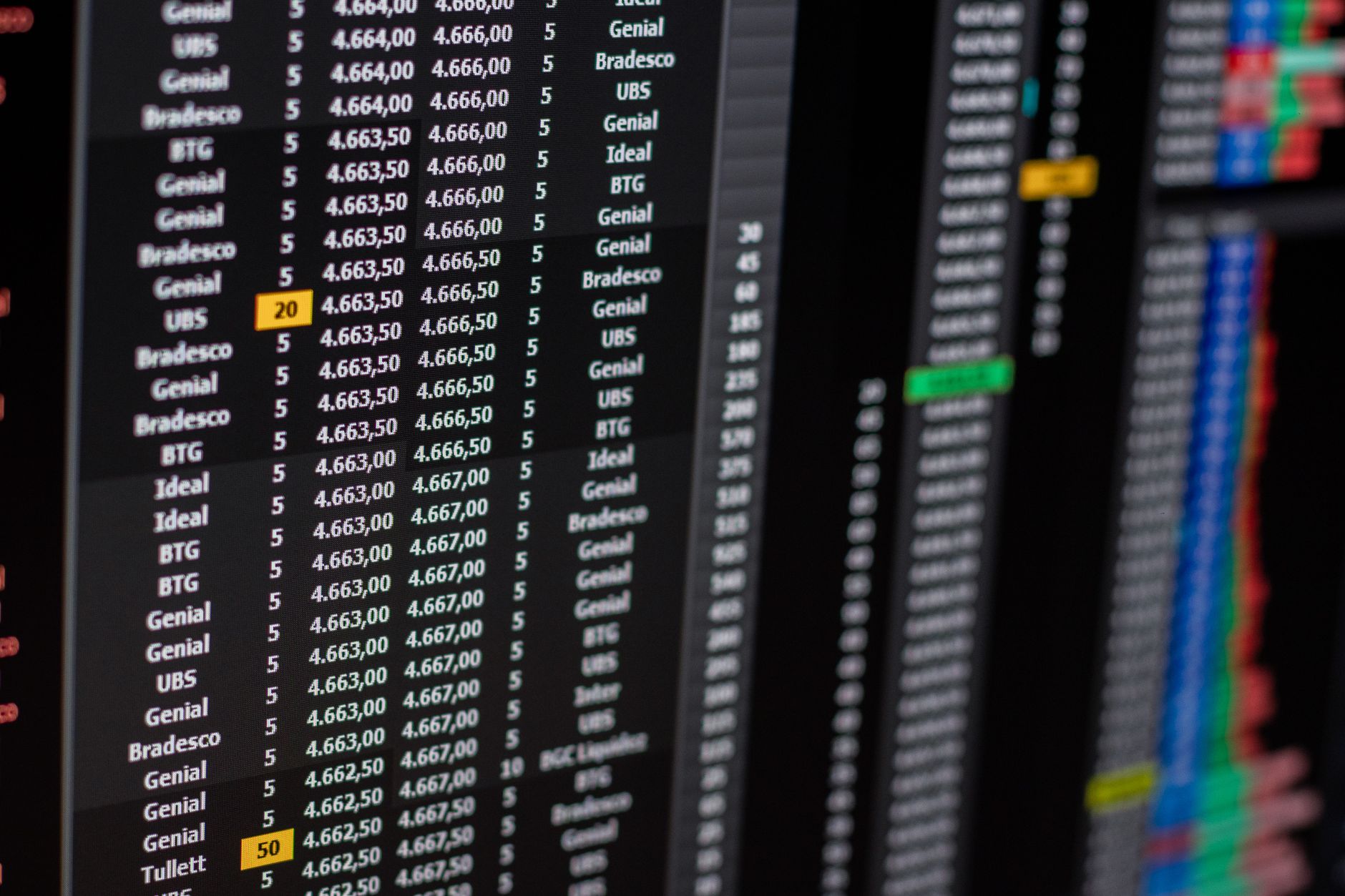
The evolution from simple automation to true intelligence marks a paradigm shift in the foreign exchange markets. For decades, algorithmic trading was the domain of quantitative analysts utilizing linear regression and stochastic calculus. Today, the integration of generative architectures allows for a more holistic approach, where an ai trading bot for forex can synthesize central bank speeches, geopolitical volatility, and technical indicators simultaneously to inform high-frequency decisions.
Key takeaways
- LLMs act as reasoning engines, not just execution bots.
- Hybrid architectures separate semantic reasoning from low-latency execution.
- Generative AI allows for the processing of unstructured news data.
- Deterministic guardrails are essential to mitigate AI hallucination risks.
From Automation to Intelligence: The LLM Paradigm Shift
Traditional algorithmic trading has long been limited by the "brittleness" of its code. A standard execution algorithm follows a rigid mathematical model; if a market event occurs that was not pre-programmed—such as an unexpected interest rate pivot or a sudden liquidity vacuum—the algorithm fails or, worse, executes incorrectly. This is the gap between automation and true intelligence.
Generative AI introduces a layer of semantic reasoning. When we discuss autonomous crypto trading agents or Forex agents, we are referring to systems capable of "contextual awareness." An LLM-driven agent doesn't just see a price drop in EUR/USD; it understands that the drop is correlated with a specific hawkish tone in a recent ECB press conference, allowing it to distinguish between a temporary correction and a fundamental trend reversal.
This capability is central to how AI Agents and RWA are revolutionizing wealth management. By bridging the gap between qualitative news and quantitative data, these agents act as a bridge between the macro world and the micro-execution layer, providing a level of sophistication previously reserved for Tier-1 institutional desks.
The Architecture of Real-Time Execution
To achieve high-frequency execution, a generative system cannot simply "chat" with a broker. The architecture must be bifurcated into a Reasoning Layer and an Execution Layer. The Reasoning Layer (the LLM) processes massive streams of unstructured data, such as Bloomberg terminals, Twitter feeds, and economic calendars, to generate a "market state" summary.
This summary is then fed into the Execution Layer, which consists of low-latency, high-performance code (often written in C++ or Rust) designed for algorithmic trading execution. The LLM does not place the trade; it updates the weights and parameters of the execution engine. This prevents the latency issues inherent in calling an API for every single micro-movement, ensuring that the bot responds to market volatility in milliseconds rather than seconds.
This hybrid approach mitigates the primary risk of generative AI: hallucination. By separating the "thinking" from the "doing," we ensure that the LLM provides the strategic direction while the deterministic code handles the mathematical precision of the order entry, slippage control, and stop-loss management.
Processing Unstructured Data at Scale
The true edge in Forex lies in the ability to ingest and interpret non-linear data. While a standard bot looks at Moving Averages or RSI, a generative agent looks at the *intent* behind the movement. For example, during a period of high volatility, the agent can parse the sentiment of real-time news wires to determine if the volatility is driven by a systemic shock or a localized liquidity event.
This requires a sophisticated pipeline of Retrieval-Augmented Generation (RAG). The agent queries a vector database containing historical market reactions to similar news events, allowing it to predict the likely path of a currency pair with higher probabilistic accuracy. It is no longer just about what the price *is*, but what the price is *likely to become* based on the semantic weight of current events.
"The future of Forex is not in faster execution alone, but in faster comprehension. The winner will not be the one with the lowest latency to the exchange, but the one with the lowest latency from 'event' to 'understanding'."
Technical Comparison: Traditional vs. Generative Systems
Understanding the distinction is vital for any institutional or professional trader looking to upgrade their stack. The following table outlines the fundamental differences in how these two methodologies approach the market.
| Feature | Traditional Algorithmic Bot | Generative AI Agent |
|---|---|---|
| Data Input | Structured (Price, Volume) | Multimodal (News, Sentiment, Price) |
| Decision Logic | Deterministic (If/Then) | Probabilistic (Reasoning-based) |
| Adaptability | Low (Requires manual recalibration) | High (Self-adjusting to context) |
| Latency Profile | Ultra-Low (Microseconds) | Medium-Low (Hybrid Architecture) |
| Risk Management | Static Stop-Loss/Take-Profit | Dynamic Risk-Parity Adjustment |
Implementing the Execution Stack
Deploying a professional-grade ai trading bot for forex requires more than just an API key. It requires a robust infrastructure that can handle the high-velocity data streams inherent in the FX market. Developers must prioritize the integrity of the data pipeline to avoid "garbage in, garbage out" scenarios.
A successful deployment follows a specific sequence to ensure the model is tuned to the specific liquidity profile of the currency pairs being traded:
- Data Ingestion & Vectorization: Establish high-speed feeds for both OHLCV data and real-time NLP-ready news feeds.
- Contextual Training: Fine-tune the LLM on historical macroeconomic cycles to ensure it understands the relationship between interest rates and currency strength.
- Backtesting with Semantic Stress: Test the agent not just on historical price, but on historical news events to see if its "reasoning" would have held up.
- Paper Trading & Latency Tuning: Run the hybrid architecture in a live environment to measure the delay between the LLM's reasoning and the Execution Layer's action.
- Risk Guardrail Integration: Implement hard-coded circuit breakers that override the AI if it attempts to exceed pre-defined drawdown limits.
Navigating Risks and Compliance
While the potential for alpha is significant, the risks are non-trivial. Generative models are susceptible to "model drift," where the agent's reasoning becomes decoupled from reality as market regimes change. Furthermore, in the highly regulated Forex and crypto markets, the lack of transparency in "black box" AI models can pose compliance challenges. As traders look toward navigating crypto tax rules in 2026, they must also consider the auditability of their AI's decisions.
Risk management in a generative environment must be multi-layered. You cannot rely on the AI to manage its own risk; you must have a deterministic, non-AI layer that monitors the AI. This layer should be capable of killing all active positions if the AI's logic enters a loop or if market volatility exceeds the model's trained parameters. This is especially critical when managing high-yield strategies, similar to those discussed in the 2026 playbook for high yield savings accounts, where capital preservation is paramount.
The bottom line
Generative AI is moving Forex trading from the era of "reaction" to the era of "anticipation." By integrating LLMs as reasoning engines within a high-speed execution framework, traders can capture alpha from the intersection of news and price action. However, the key to success is not replacing human oversight with AI, but using AI to augment the speed and depth of market comprehension.
Next Action: Begin by auditing your current algorithmic stack. If your bots are purely price-action based, start researching RAG-based architectures to integrate sentiment analysis into your decision-making pipeline.
Frequently asked questions
+Can an LLM trade Forex in real-time?
An LLM alone is too slow for high-frequency Forex. However, a hybrid architecture uses the LLM for strategic reasoning (processing news/sentiment) while a low-latency execution engine handles the actual trade orders in milliseconds.
+What is the main risk of using AI in Forex trading?
The primary risks include model drift, where the AI's logic fails in new market regimes, and hallucinations, where the AI misinterprets news data. These must be mitigated with deterministic risk guardrails.
CF
Crypto Finance Editorial Desk
Crypto Finance's editorial desk pairs an AI research pipeline with human review so every article is accurate, useful and free of hype.
Related articles

Forex Trading
Spread Vs Commission: A Practical Guide for 2026
Spread Vs Commission: a practical, risk-aware guide covering costs, trade-offs, implementation steps and how to measure results within 90 days.
Editorial DeskAug 18, 20265 min23
Forex Trading
AI Agents for Forex Volatility: Performance vs Human Traders
A technical benchmark comparing AI agents for forex volatility against human traders, analyzing execution speed, emotional bias, and performance in high-volatility pairs.
Editorial DeskAug 16, 20265 min27
Forex Trading
Algorithmic Forex Software vs Human Trader Performance
Explore the performance gap between algorithmic forex trading software and human traders. Discover how AI bots manage risk during high volatility and market shifts.
Editorial DeskAug 15, 20265 min22