AI-driven RWA wealth management optimizes portfolios by integrating generative AI reasoning with tokenized real-world assets to unlock liquidity in traditionally illiquid markets. By utilizing predictive analytics on blockchain-based asset data, investors achieve hyper-personalized, risk-adjusted exposure to private equity, real estate, and credit through automated, real-time rebalancing engines.
AI-Driven RWA Wealth Management: A Strategic Framework
Discover how AI-driven RWA tokenization is revolutionizing wealth management by combining generative AI reasoning with real-world asset liquidity for hyper-personalized portfolios.
Crypto Finance Editorial DeskPublished Aug 9, 2026Updated Aug 9, 20265 min read1,020 words30 views
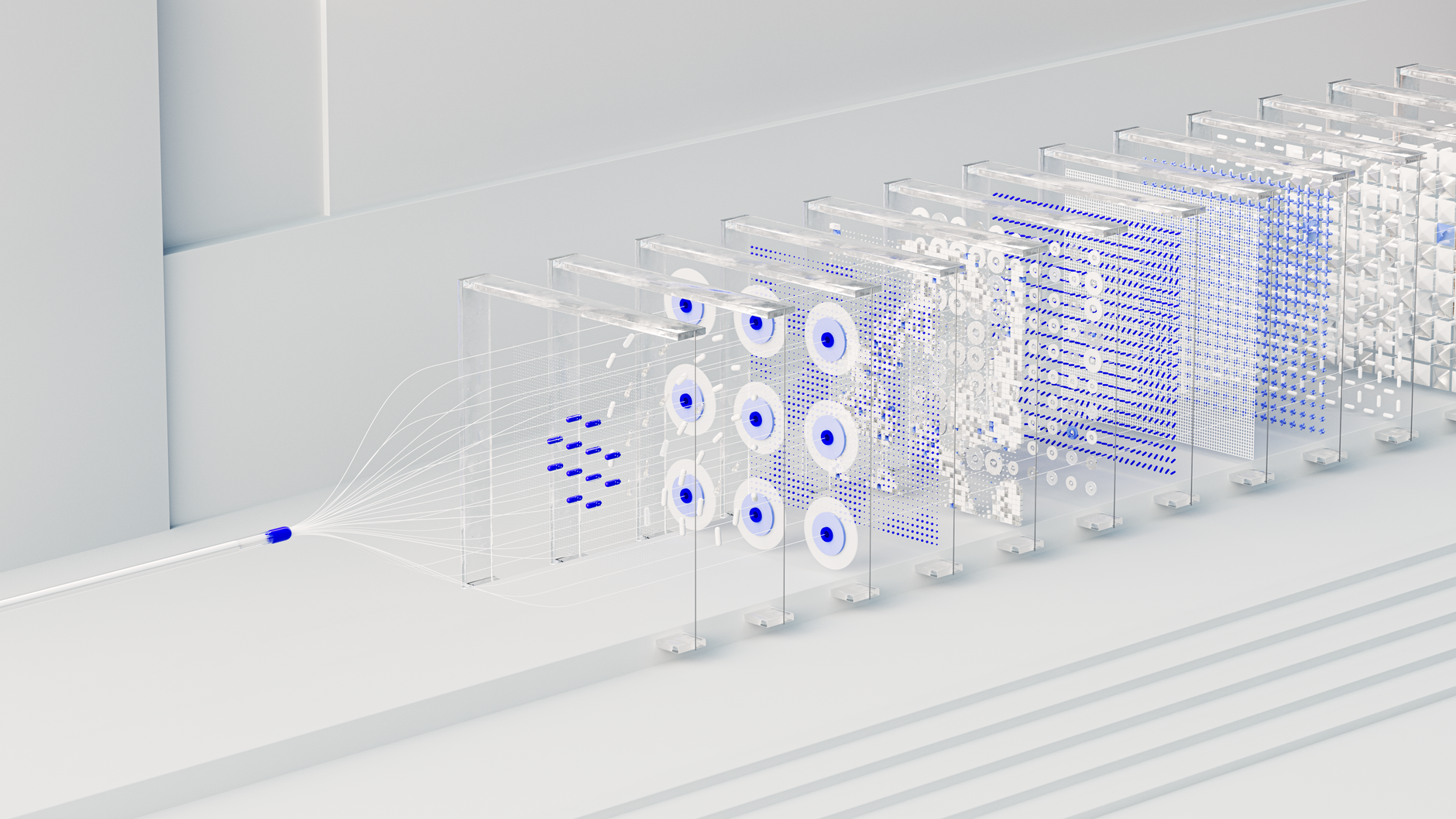
The convergence of Large Language Models (LLMs) and Real-World Asset (RWA) tokenization represents a paradigm shift in fiduciary technology. While traditional wealth management relies on historical data and periodic human reviews, the new framework utilizes ai financial advisory software to ingest live on-chain telemetry and off-chain macro signals. This creates a feedback loop where asset liquidity profiles and risk parameters are adjusted dynamically, bridging the gap between institutional-grade diversification and retail accessibility.
Key takeaways
- AI reasoning bridges the gap between qualitative data and quantitative RWA liquidity.
- Tokenization provides the granular data necessary for high-fidelity AI advisory.
- Real-time rebalancing requires robust decentralized oracles to prevent data errors.
- Regulatory compliance must be baked into the AI's execution logic.
The Convergence of AI and RWA
The fundamental value proposition lies in the synergy between the programmable nature of tokens and the cognitive capabilities of advanced AI. Tokenization provides the granular, real-time data required for high-fidelity modeling, while AI provides the reasoning engine to interpret that data. When we discuss the benefits of rwa tokenization, we are not just talking about fractional ownership; we are talking about the creation of a highly granular, machine-readable data layer for every asset class.
In a traditional setting, assessing the liquidity risk of a commercial real estate fund involves manual due diligence and significant time lags. In a tokenized ecosystem, an AI Agent can monitor the secondary market volume of a specific RWA token and immediately cross-reference it with broader market volatility. This enables a level of precision previously reserved for high-frequency trading desks in the equity markets, now applied to the private markets.
Architecting the AI Advisory Engine
A robust technical framework for this integration requires three distinct layers: the Data Ingestion Layer, the Reasoning Layer, and the Execution Layer. The Data Ingestion Layer pulls from both blockchain oracles (providing real-time price and volume) and traditional financial news feeds. This ensures the personalized robo advisor ai is not operating in a vacuum but is aware of geopolitical shifts that might impact the underlying physical assets.
The Reasoning Layer utilizes transformer-based models to perform multi-variate analysis. Unlike legacy algorithms that follow rigid rules, generative AI can interpret nuanced qualitative data—such as regulatory changes or sentiment shifts in specialized forums—and translate them into quantitative risk adjustments. This is where the true tokenized real world assets benefits emerge: the ability to turn unstructured qualitative information into actionable portfolio adjustments.
"The future of wealth management is not about predicting the market, but about building an autonomous system that can react to market shifts faster than a human can read the headline."
The Execution Layer then interacts with smart contracts to rebalance the portfolio. This minimizes slippage and ensures that the investor's risk profile remains aligned with their stated objectives. However, users must remain aware that algorithmic execution in illiquid markets carries inherent risks, particularly during periods of extreme volatility where liquidity may evaporate regardless of AI logic.
Comparative Analysis of Wealth Management Models
To understand the leap in efficiency, we must compare the legacy model against the AI-RWA integrated model. The following table highlights the structural differences in how value is generated and managed.
| Feature | Legacy Wealth Management | AI-Driven RWA Management |
|---|---|---|
| Asset Access | High barriers; institutional only | Fractional; retail and institutional |
| Rebalancing Frequency | Quarterly or semi-annually | Real-time or event-driven |
| Data Granularity | Periodic reporting (monthly/quarterly) | Continuous on-chain telemetry |
| Personalization Level | <Static risk profiles | Dynamic, hyper-personalized AI reasoning |
Technical Implementation Challenges
Implementing this framework is not without significant hurdles. The primary challenge is the 'Oracle Problem'—ensuring that the data representing the real-world asset on the blockchain is accurate and hasn't been tampered with. If the AI is making decisions based on fraudulent off-chain data, the entire portfolio strategy collapses. Therefore, a decentralized oracle network is a prerequisite for any serious ai financial advisory software deployment.
Furthermore, there is the issue of computational complexity. Running complex simulations (like Monte Carlo) on high-dimensional data in real-time requires massive compute power. Developers must optimize the inference speed of their models to ensure that the 'eal-time' aspect of the advisory remains functional. This often requires a hybrid approach: using lightweight models for monitoring and heavy-duty reasoning models for strategic rebalancing.
- Verify Data Integrity: Implement multi-signature oracles to validate off-chain asset valuations.
- Optimize Latency: Use edge computing or specialized hardware to reduce the time between data arrival and AI inference.
- Define Guardrails: Set hard limits on autonomous execution to prevent 'flash crashes' caused by feedback loops in AI logic.
- Regulatory Compliance: Integrate automated KYC/AML checks directly into the smart contract layer to ensure all tokenized transactions are compliant.
Navigating the Regulatory Landscape
As we move toward 2026, the regulatory environment for tokenized assets will become increasingly sophisticated. Investors and developers must stay ahead of these shifts to avoid compliance pitfalls. For instance, the classification of a tokenized asset (security vs. utility) will dictate the entire architecture of the AI's advisory logic. An AI must be programmed to recognize these legal boundaries to ensure it doesn't inadvertently suggest prohibited investment strategies in specific jurisdictions.
For institutional players, the complexity increases with the need for tax-efficient execution. Navigating the nuances of digital asset taxation is critical for long-term performance. We recommend consulting an Institutional Guide to Navigating Crypto Tax Rules in 2026 to ensure that the automated rebalancing logic accounts for tax-loss harvesting and capital gains implications in a way that maximizes net-of-tax returns.
The bottom line
The integration of AI and RWA tokenization is not merely an incremental improvement; it is a fundamental restructuring of how capital is allocated. To stay ahead, firms should begin by building robust data pipelines that bridge on-chain and off-chain environments. Start by piloting a small-scale personalized robo advisor ai focused on a single asset class—such as real estate—to refine the feedback loops between AI reasoning and smart contract execution before scaling to a multi-asset framework.
Frequently asked questions
+What are the primary benefits of RWA tokenization?
RWA tokenization provides fractional ownership, increased liquidity for traditionally illiquid assets like real estate, and 24/7 programmable trading capabilities. This allows for more efficient capital allocation and easier entry for diverse investor classes.
+How does AI improve RWA wealth management?
AI enhances RWA management by analyzing vast amounts of both on-chain and off-chain data. It can process unstructured information, such as news and regulatory updates, to adjust portfolio risk and liquidity profiles in real-time, far surpassing human capacity.
CF
Crypto Finance Editorial Desk
Crypto Finance's editorial desk pairs an AI research pipeline with human review so every article is accurate, useful and free of hype.
Related articles

Investing
Artificial Intelligence News in 2026: What Changed and What Works
Artificial Intelligence News: a practical, risk-aware guide covering costs, trade-offs, implementation steps and how to measure results within 90 days.
Sajib MiaSep 2, 20265 min9
Investing
How to artificial intelligence news: A Complete Step-by-Step Guide
Artificial Intelligence News: a practical, risk-aware guide covering costs, trade-offs, implementation steps and how to measure results within 90 days.
Sajib MiaSep 2, 20265 min11
Investing
Artificial Intelligence News: Impacts on Global Job Markets
Artificial Intelligence News: a practical, risk-aware guide covering costs, trade-offs, implementation steps and how to measure results within 90 days.
Sajib MiaSep 2, 20265 min8